
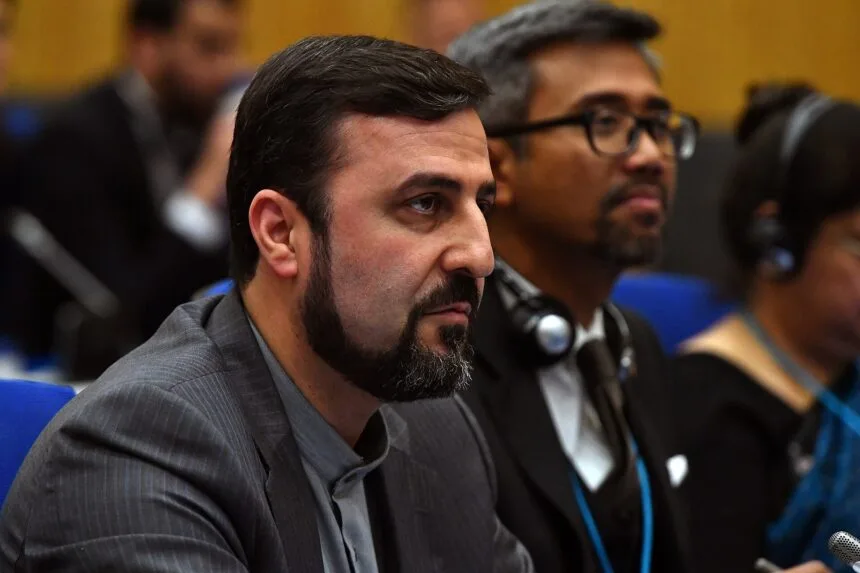
Iranian Deputy Foreign Minister Kazem Gharibabadi announced late Sunday that Tehran will bar the International Atomic Energy Agency from inspecting damaged nuclear sites until the current war permanently ends and its terms are fulfilled.
The standoff leaves international monitors unable to verify conditions at bombed facilities while the United States maintains its defensive posture across the Persian Gulf.
"We will not grant the IAEA access to the facilities until Iran's conditions are met and the war has permanently ended," Gharibabadi stated in a televised broadcast. The International Atomic Energy Agency had pressed Tehran to take steps toward resuming inspections. Although inspectors were permitted to examine the Bushehr nuclear facility in September, Iranian officials continue to block access to sites struck by American forces, including Natanz, Fordow, and Isfahan.
Washington Rebuffs Demands
The Trump administration dismissed Tehran's proposed conditions for an initial ceasefire and the reopening of the Strait of Hormuz as "unacceptable." Tehran has demanded that Washington lift sanctions and unfreeze Iranian financial assets before it ends its maritime blockade of the corridor.
Active conflict began on February 28 following joint American and Israeli military strikes that killed Iranian Supreme Leader Ali Khamenei. Earlier in November, the United States military underscored its counter-proliferation posture by introducing a $20 million financial reward program for actionable details on Iran's nuclear infrastructure.
American military capabilities in the region expanded further on Sunday as the aircraft carrier USS Theodore Roosevelt arrived in the Middle East, increasing the active deployment of United States carrier strike groups in the area to three.