
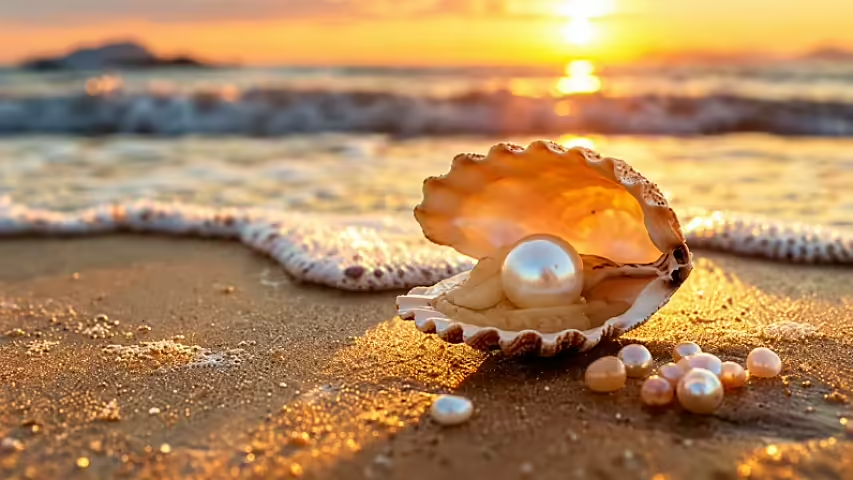
Understanding what makes pearls valuable comes down to several core quality traits, including luster, surface cleanliness, shape, size, nacre thickness, and variety. While pearls remain among the most popular gems in fine jewelry, retail prices range from affordable everyday items to exceptionally rare, high-ticket stones. The reason two similar-looking pearls differ dramatically in price lies in their specific quality attributes.
The 7 Key Factors That Determine Pearl Value
1. Luster
Luster is the most critical metric in determining a pearl’s worth, measuring how crisply and brightly the surface reflects light. High-grade pearls exhibit sharp, mirror-like reflections, whereas lower-quality specimens display a dim, chalky appearance. Gems with superior luster consistently command premium market prices.
2. Surface Quality
Because pearls form organically inside mollusks, their exterior surfaces rarely reach complete perfection. Tiny pits, blemishes, wrinkles, or scratches can develop during growth. The smoother and cleaner the surface, the higher the valuation. While microscopic marks are standard evidence of natural growth, prominent visible flaws reduce a pearl’s appraisal.
3. Shape
Perfectly round, spherical pearls are the rarest and most expensive shape. While jewelry designers frequently craft beautiful pieces using drop, oval, button, and irregular baroque pearls, classic spherical pearls sustain the highest demand and top prices.
4. Size
All other quality factors being equal, larger pearls are significantly more expensive than smaller counterparts. Growing an oversized, high-grade pearl demands substantially more cultivation time and care, and such specimens are statistically far rarer in nature.
5. Nacre Thickness
As a pearl develops, the oyster deposits concentric crystalline layers of nacre around its nucleus. The thickness of this coating directly affects both deep optical brilliance and physical resilience. Pearls with thick nacre remain durable and valuable over generations, whereas thin nacre can quickly dull, peel, or sustain chip damage.
6. Origin and Variety
The geographic environment and mollusk species responsible for culturing directly influence market value:
- South Sea pearls: Cultivated in warm southern waters, these pearls are famous for large diameters, satiny silver or golden tones, and top-tier pricing.
- Akoya pearls: Grown primarily in Japan and China, they are renowned for classic round symmetry and sharp, mirror-grade luster.
- Tahitian pearls: Harvested in French Polynesia, these gems are celebrated for rich natural hues ranging from deep charcoal to peacock green.
- Freshwater pearls: Produced in lakes and rivers, they offer diverse shapes and colors at comparatively accessible prices.
7. Strand Matching
In multi-pearl jewelry such as necklaces and matched bracelets, harmony across stones is vital. Jewelers evaluate hundreds of loose gems to assemble a strand where size, color overtones, shape, and luster align smoothly. Assembling a seamlessly matched set requires considerable skill and sorting time, driving up the retail cost.
Conclusion
A pearl’s worth is never decided by size alone. True valuation emerges from the unified assessment of luster, surface smoothness, shape rarity, nacre depth, and origin, ensuring buyers understand the craftsmanship and natural scarcity behind fine pearl jewelry.