
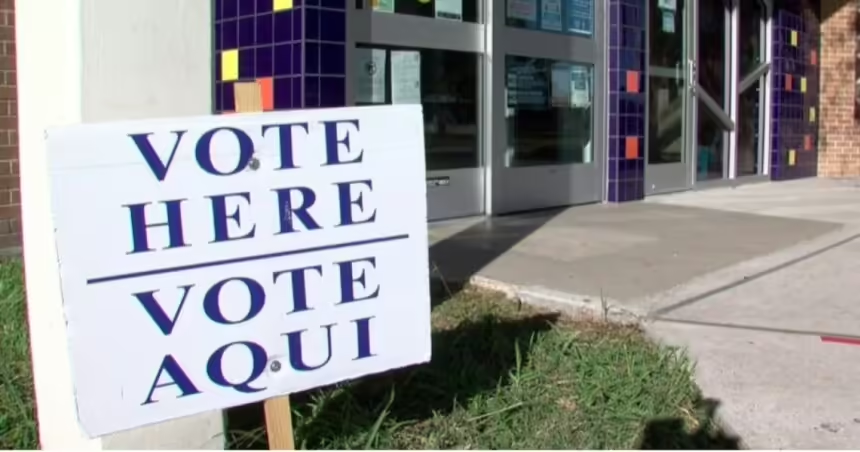
Americans voting across the country today face a patchwork of state identification rules at polling stations. While 36 states have laws requesting or requiring identification documents, 14 states and Washington, D.C., verify voters through non-document checks like signature matching.
Essential Rules for In-Person Voting Today
- Thirty-six states ask for identification at polling places, while 14 states and Washington, D.C., verify registration without requiring documents.
- Fourteen states require voters who lack acceptable identification to complete extra procedural steps after Election Day for provisional ballots to count.
- Twenty-two states with voter identification laws provide alternative verification at the polling place without requiring follow-up action.
- Kansas requires government-issued photo credentials, but permits expired documents for residents aged 65 and older.
- Tennessee enforces strict state or federal photo rules, requiring voters who cast provisional ballots to show identification within two days.
States Without Photo Identification Mandates
Fourteen states and Washington, D.C., confirm voter eligibility without asking for an identification credential at the polling desk, relying instead on alternatives such as comparing signatures against election records.
In Maine, registered voters do not need to show an identification document at check-in, as election clerks verify voter rolls after voters state their full name and home address. Those who register on Election Day in Maine must present proof of identity and residence. When new registrants lack documentation, poll workers provide a challenged ballot, which election officials count normally unless a tight contest requires individual inspection. Maine voters reaffirmed this process in November 2025 by rejecting a statewide ballot referendum that sought to impose photo identification mandates and tighten absentee voting rules.
Government-Issued Photo Requirements in Kansas
Kansas enforces a government-issued photo identification rule for in-person voting. Voters must display credentials such as a driver's license, U.S. passport, student identification card, or state nondriver identification card before poll workers issue a ballot.
The Kansas Secretary of State outlines specific exemptions to these photo requirements. Voters aged 65 and older may use expired photo documents. Exceptions also apply to permanent advance voters who have registered illnesses or disabilities, as well as individuals with documented religious objections to photography.
Strict Federal and State Card Mandates in Tennessee
Tennessee requires voters to present photo identification issued by the federal government or the state of Tennessee. The Tennessee Secretary of State accepts expired documents, including state driver's licenses, passports, military photo cards, and Tennessee handgun carry permits.
Tennessee polling stations do not accept student cards, library cards, out-of-state credentials, or non-citizen identification issued by the Department of Safety and Homeland Security. Exemptions apply to absentee voters casting ballots by mail, residents voting inside nursing homes or assisted living centers, hospitalized voters, individuals with religious objections to photos, and indigent residents unable to obtain an identification card without paying a fee.
Provisional Ballots and Post-Election Deadlines
Federal law protects the right of individuals who affirm their registration and eligibility to cast a provisional ballot in federal elections. Whether election commissions accept that ballot depends on state verification procedures.
Among the 36 states requesting or requiring identification, 22 allow voters without approved cards to use alternatives on-site without subsequent action. In 14 states, voters must complete additional verification steps before local canvassers certify results. In Tennessee, a voter who forgets an acceptable photo document must visit their county election commission office within two days to display qualifying identification, or local officials will not tally the provisional vote.