
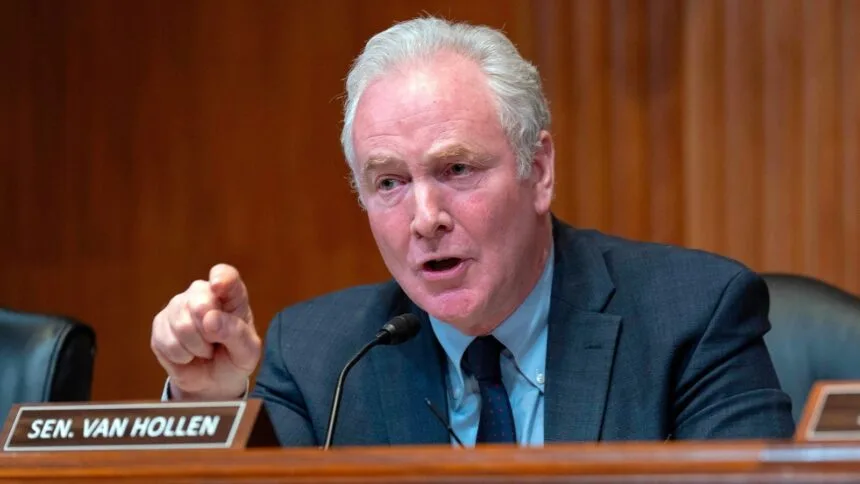
Senator Chris Van Hollen announced on November 12, 2026, that he will challenge Chuck Schumer for Senate majority leader in the upcoming Congress.
Democrats secured at least 55 seats in the 2026 midterm elections, flipping at least eight seats while the contest in Alaska remains undecided. Van Hollen stated that the electorate called for change, arguing that Senate Democrats require new leadership rather than maintaining the status quo.
Schumer replied publicly that he welcomes caucus discussions and stated he already commands the votes necessary to remain the Democratic leader. "I'm proud of what we've accomplished together–55 seats and counting is an amazing result–and I have the votes to continue serving as Democratic Leader," Schumer said in a statement.
Caucus Math and Coalition Lines
The Senate Democratic caucus conducts leadership elections in December by secret ballot, where winning requires a simple majority vote. In a caucus of at least 55 members, a successful candidate needs at least 28 votes.
Endorsements emerged immediately on both sides of the contest. Senator Bernie Sanders endorsed Van Hollen, stating that voters demanded an alternative to entrenched interests. Senator-elect Abdul El-Sayed of Michigan also backed the challenge, saying he had urged Van Hollen earlier in the year to seek the post. Meanwhile, Senators Brian Schatz, Kirsten Gillibrand, Jacky Rosen, and Angus King declared their support for Schumer to stay on as leader.
Other caucus members withheld early commitments. Senator Elissa Slotkin of Michigan declined to endorse Schumer, explaining that she expects candidates to present a concrete plan that differs from past practice. Beyond caucus mechanics, Van Hollen urged using the December 11 government funding deadline to pressure the Trump administration to halt the Iran war, while criticizing Schumer for past involvement in open Democratic primary races.