


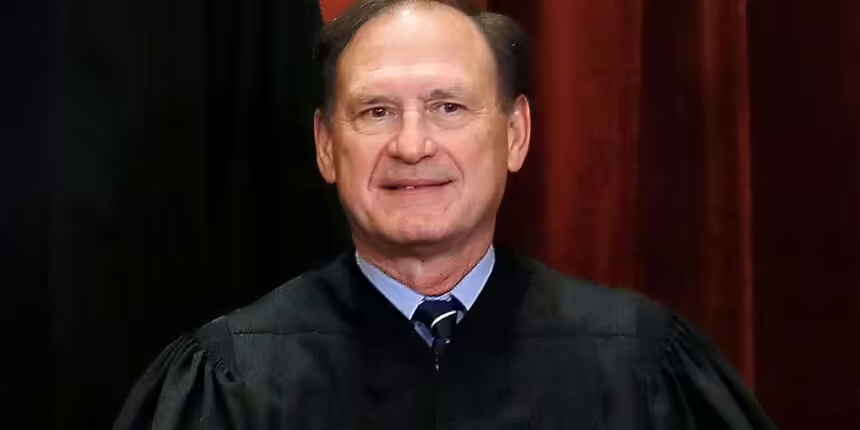
Supreme Court Justice Samuel Alito recused himself from the high-profile Supreme Court climate case involving Suncor Energy and Boulder, Colorado, without providing an explanation. The recusal was announced in a letter sent by Supreme Court Clerk Scott Harris to the parties' lawyers on Monday, arriving just days before oral arguments were scheduled to begin in Washington, D.C.
Why did Justice Alito recuse from the climate case?
Justice Alito stepped away from the Suncor Energy Inc. v. County Commissioners of Boulder County proceedings without making a public explanation. The case focuses on whether Boulder, Colorado, can use state-law tort claims to hold energy companies accountable for climate change contributions, a legal strategy that has drawn intense debate among legal experts and state officials.
Legal analysts noted that while the reasons remain undisclosed, Alito previously recused himself in January from another energy-related lawsuit due to stock ownership considerations. Meanwhile, Justice Elena Kagan is facing separate calls from conservative legal groups to recuse herself from the same Supreme Court climate case over a previously published scientific evidence manual chapter.
What is the broader impact of the Supreme Court climate showdown?
The litigation addresses whether local municipalities can utilize public nuisance lawsuits in state courts to pursue environmental policy objectives rather than relying on legislative action. Critics and supporters alike view the proceeding as a major test of how judicial systems handle complex climate liability claims.
Legal observers point out that the absence of a full bench leaves the court operating without its complete complement of nine justices for the high-profile opening of the term. Observers continue to monitor the proceedings closely as oral arguments proceed without further public statements from the court regarding the recusal.