
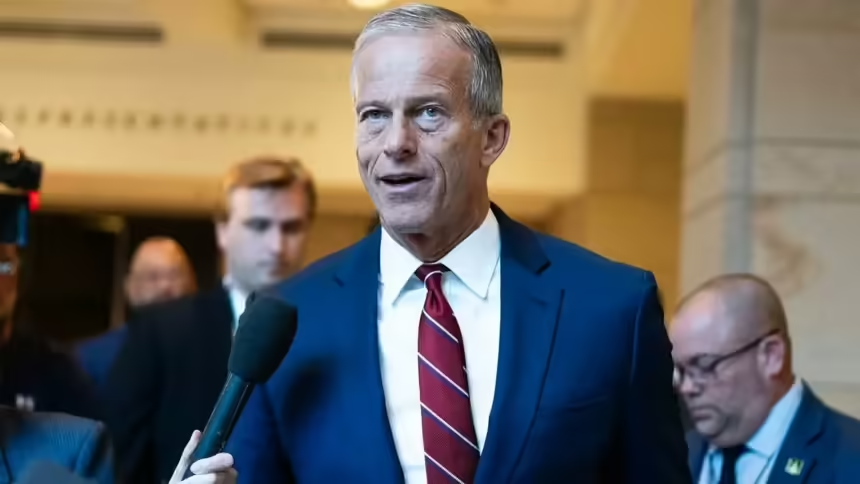
Senate Republicans reelected Senator John Thune of South Dakota as their party leader on Tuesday by acclamation, selecting him for another two-year term as the conference prepares to enter the minority.
The leadership decision followed more than seven hours of closed-door discussions inside the Old Senate Chamber across morning and afternoon sessions. Before the final vote, senators turned back a procedural effort to postpone leadership selections. A motion led by Senator Ron Johnson of Wisconsin to delay the balloting failed by a vote of 31 to 15.
Delay Motion Fails Without a Challenger
Conservatives backing the delay effort included Senators Rick Scott, Ted Budd, Mike Lee, John Kennedy, Jim Banks, and Dave McCormick. Those seeking the postponement did not field or nominate a candidate to run against Thune for the post. Explaining his stance, Johnson remarked, "This has never been anything against John Thune. I think he has been very unfairly attacked, you know, by our base, and I don't agree with that."
The leadership slate approved alongside Thune added Senator Bernie Moreno of Ohio. In the House of Representatives, Representative Jim Jordan defeated Representative Steve Scalise in a separate vote to become the House minority leader.
Transition to the Senate Minority
The leadership vote comes after midterm election results where Democrats gained at least seven Republican-held Senate seats. Democrats won races in states including Ohio, North Carolina, Texas, South Carolina, and Kansas. Contests in Alaska and Mississippi remained uncalled at the time the conference met.
During his prior two years directing the majority, Thune managed the passage of White House tax cuts, defense legislation, and border security funding, along with judicial confirmations and two government shutdowns. Internal discussions among conservative members had previously surfaced during debates over the SAVE America Act, an election measure backed by President Donald Trump that Thune stated lacked sufficient floor votes to advance.