


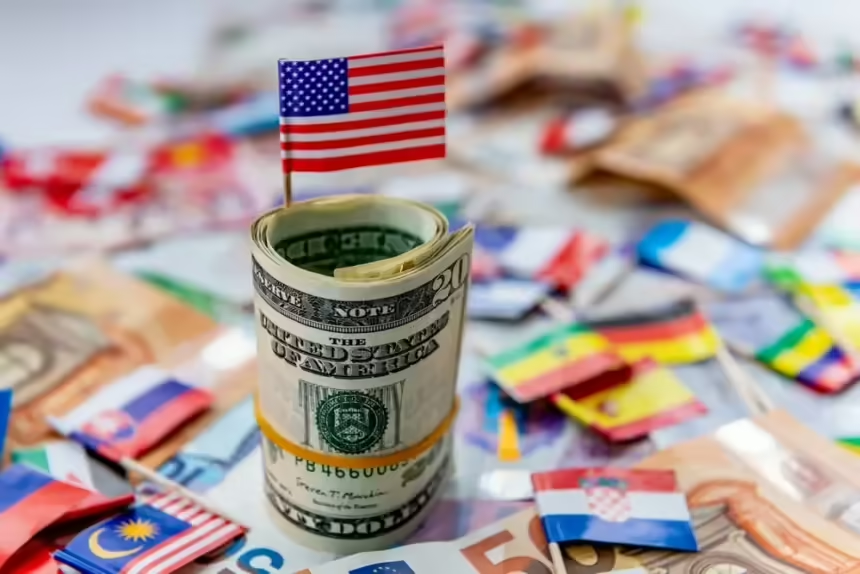
Today, the future of the US dollar is a growing concern for many people, as most individuals keep their savings primarily in dollars.
Governments operate similarly. To cite a single fact, 57.13 percent of global central bank foreign exchange reserves are held in US dollars. The dollar’s share is approximately three times that of the euro, which ranks second.
Overall, the euro accounts for 20.03 percent of global currency reserves, the Japanese yen accounts for 5.44 percent, the British pound sterling for 4.40 percent, the Canadian dollar for 2.48 percent, and the Australian dollar for 2.11 percent.
The Chinese yuan holds a 1.99 percent share in global currency reserves, while the Swiss franc accounts for 0.24 percent. Other currencies make up a total of 6.18 percent.
Thus, the US dollar and the euro together account for more than 77 percent of allocated central bank reserves, while remaining currencies share approximately 23 percent.
It is known that in recent years, several countries have taken steps to reduce their dependence on the dollar and increase the use of alternative currencies, initiatives designed to cause the dollar to lose value. However, current reality proves that the dollar faces no serious threat over the next decade. Even the nations seeking to devalue the dollar continue to hold their reserve funds in US dollars. Consequently, the dollar maintains its position as the international reserve currency.