


What does the Israel-Morocco deal involve?
Israel and Morocco have agreed to upgrade their diplomatic missions to full embassies and exchange ambassadors. Finalized in New York, the agreement also includes plans to reinstate direct flights by the end of 2026 and implement new measures for investment protection and tax cooperation. The move marks a significant step in deepening the ties established under the U.S.-brokered Abraham Accords, which first normalized relations between the two nations in 2020.
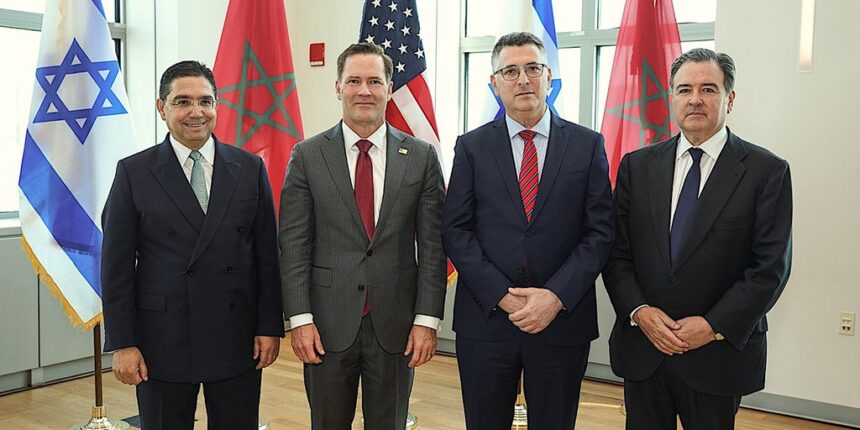
The trilateral meeting involved U.S. Ambassador to the United Nations Mike Waltz, Moroccan Foreign Minister Nasser Bourita, and Israeli Foreign Minister Gideon Sa’ar. Beyond formalizing diplomatic status, the countries pledged to expand cooperation across various sectors, including technology, agriculture, energy, and regional security. The U.S. and Israel also reaffirmed their recognition of Moroccan sovereignty over Western Sahara.
How does this affect regional security?
Officials highlighted the importance of regional cooperation in response to threats against international shipping, particularly from Iran-backed Houthi forces. The discussion emphasized the need to protect the Bab el-Mandeb Strait, a critical maritime passage for global oil transit. While officials did not detail specific operational plans, they noted that the normalization framework serves as a platform for nations with shared interests to address regional instability and ensure freedom of navigation.
The meeting occurred shortly after the sixth anniversary of the Abraham Accords. During the discussions, participants argued that these diplomatic ties provide practical tools for regional stability, including humanitarian efforts in Gaza. Officials suggested that moving beyond rhetoric toward active engagement is essential for fostering long-term peace in the Middle East.