
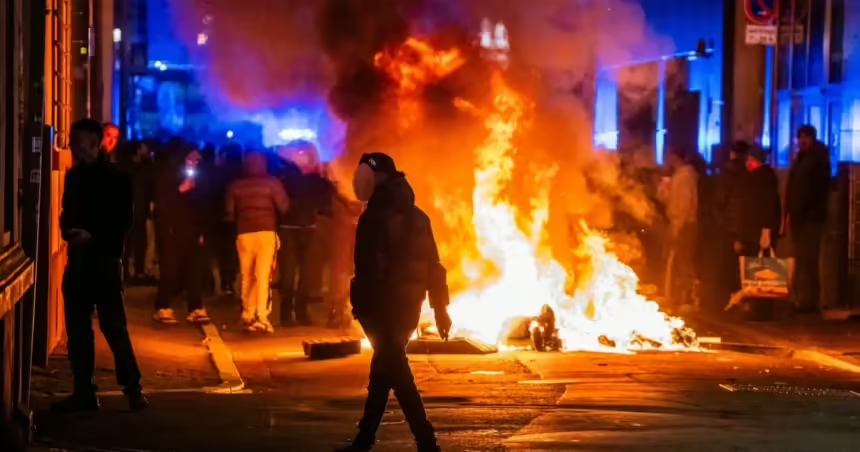
Demonstrations led by youth across 34 German cities on Oct. 31 ended in clashes, looting, and dozens of detentions after nightfall. Rallies organized by the group Gen Z Regelt called for reduced living costs, greater funding for education, and an end to measures linked to mandatory military service.
While daytime gatherings remained mostly peaceful, unrest developed during the evening in commercial hubs. In Frankfurt, rioters smashed shop windows, set street fires, and looted several stores, including a specialist firearms merchant. Frankfurt police stated: "In the city center, windows have been smashed at several shops. Molotov cocktails are also being thrown at the emergency services. We urge all bystanders to avoid the city center."
Clashes in Frankfurt, Berlin, and Cologne
Officers in Frankfurt cordoned off the Die Zeil commercial district and took roughly 30 individuals into custody. Hesse Interior Minister Roman Poseck stated that about 100 far-left extremists staged attacks against police with pyrotechnics, bottles, and stones.
In Berlin, police intervened to disperse an evening crowd after officers were struck by pyrotechnics and stones. Berlin police confirmed that 27 officers suffered minor injuries, with up to 56 individuals temporarily detained. In Cologne, about 200 people gathered outside Cologne Cathedral, hurling bicycles and bottles at police, which left one person injured and led to five detentions. Hamburg police deployed a water cannon and pepper spray after demonstrators set fire to construction materials and built street barricades.
Grievances Over Living Costs and Military Service
Turnout estimates diverged from original organizer forecasts of more than 180,000 attendees, though organizers stated over 100,000 people took part nationwide. "We are here today to fight for peace and freedom, rather than for war and coercion," said Lina Friedrich, a spokesperson for Gen Z Regelt. "What matters most to us is better support for the health and education systems."
Protesters also directed their focus toward Germany's military modernization law, which took effect on Jan. 1, 2026. The statute establishes mandatory survey questionnaires for 18-year-old men while keeping military service voluntary unless the legislature determines a draft is required to address recruitment shortfalls.