
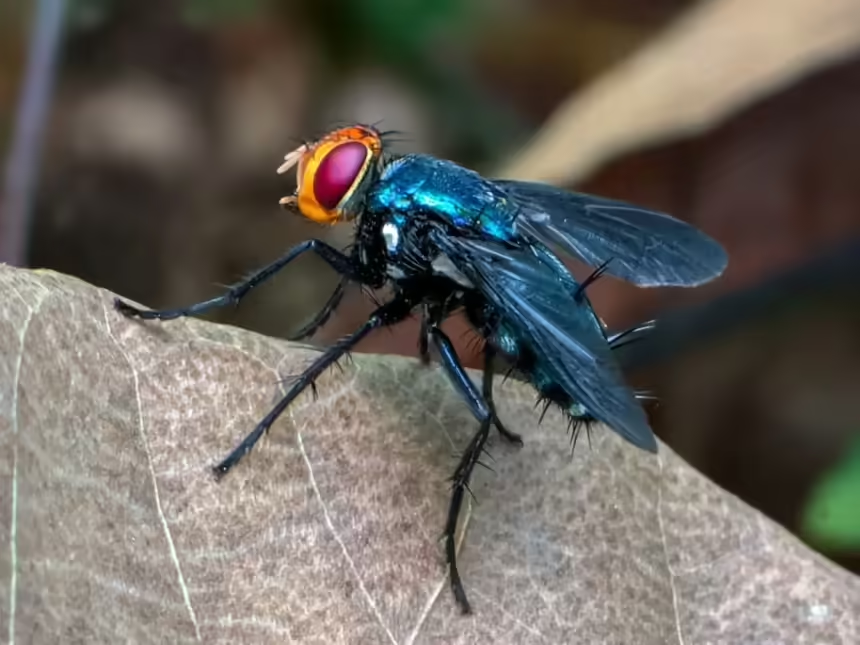
Federal agriculture authorities confirmed on October 28, 2026, that an infested ranch dog in Cochise County, Arizona, tested positive for New World screwworm larvae. The finding marks Arizona's first detection of the flesh-eating parasite since its domestic eradication in 1966, expanding the current southwestern outbreak across three states alongside Texas and New Mexico.
In response to the detection, the United States Department of Agriculture and state officials enacted a 20-kilometer containment zone around the site. The perimeter enforces strict livestock movement restrictions, heightened trapping, and live animal inspections to prevent the parasite from establishing permanent local breeding populations. Agriculture workers also distributed roughly one million sterile male screwworm flies across Cochise County to disrupt wild reproduction.
Diagnostic tests at the National Veterinary Services Laboratories in Ames, Iowa, verified the larvae on October 28 after a veterinarian discovered an extensive infestation inside a wound on the dog's back on October 26. The animal had no recorded travel outside the county or state. The dog received medical care and is expected to survive, while veterinary teams monitor surrounding livestock on the ranch.
"We have been preparing for this possibility for a long while and are acting swiftly," Arizona State Veterinarian Dr. Ryan Wolker said.
Containment Measures and Treatment Approvals
To safeguard animal populations, federal agencies are mobilizing emergency supplies and pest suppression tools across the region. The federal government designated $25 million to construct sterile fly dispersal infrastructure in Arizona while maintaining nationwide releases of 100 million sterile flies each week.
Regulators have also cleared medical countermeasures for domestic herds and household animals. The Food and Drug Administration issued an Emergency Use Authorization for generic ivermectin injections in cattle and authorized nitenpyram oral treatments to manage infestations in dogs and cats.
"This authorization reflects the FDA's commitment to expanding generic drug options against New World screwworm," Timothy Schell, director of the FDA Center for Veterinary Medicine, said.
The Cochise County finding brings total domestic detections to 71 across animals since June 2026, with 18 remaining active as of October 28. Detections accelerated during October, recording 19 monthly cases by October 28 compared to three documented in September. Federal health officials affirmed that New World screwworm does not compromise the commercial meat supply because larvae consume living tissue rather than processed carcass meat, and the Centers for Disease Control and Prevention evaluated the domestic public health threat to humans as very low.