


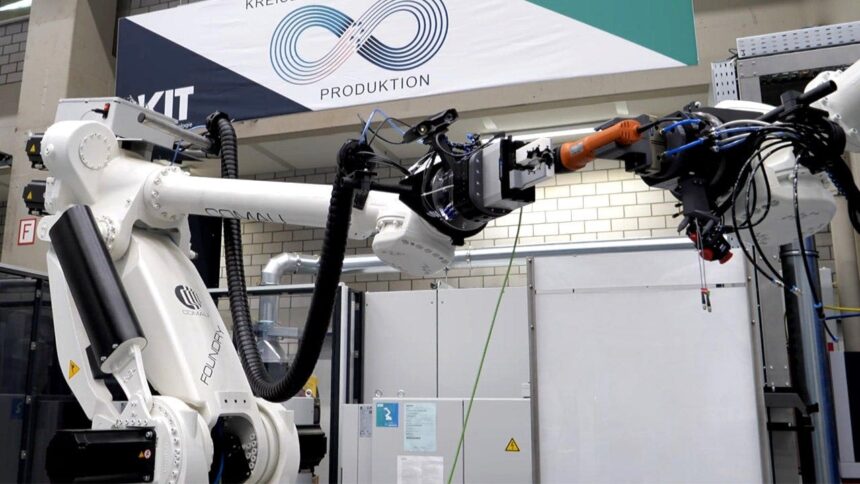
Researchers at the Karlsruhe Institute of Technology have developed a new robotic disassembly system capable of adapting to damaged or incomplete machinery. Presented at the 2026 IEEE International Conference on Robotics and Automation in Vienna, this technology allows robots to navigate unexpected obstacles like stuck screws or missing components, marking a significant advancement in automated repair and recycling processes.
How does the robotic disassembly system work?
The system utilizes a probabilistic planning approach known as a Partially Observable Markov Decision Process (POMDP). Instead of following a rigid, pre-programmed sequence, the robot assigns probabilities to potential issues, such as stuck screws or missing parts. It continuously updates its understanding of the machine's state based on real-time feedback, allowing it to adjust its tactics and choose alternative disassembly routes when obstacles arise.
Why is this technology important for automation?
Traditional industrial automation relies on predictable environments where every component behaves exactly as expected. However, broken or aging machines often feature corroded parts and unpredictable configurations that derail standard robotic sequences. By enabling robots to recognize and adapt to these uncertainties, this new system improves efficiency in industrial maintenance and recycling, potentially reducing the time and human intervention required to dismantle complex, damaged equipment.