


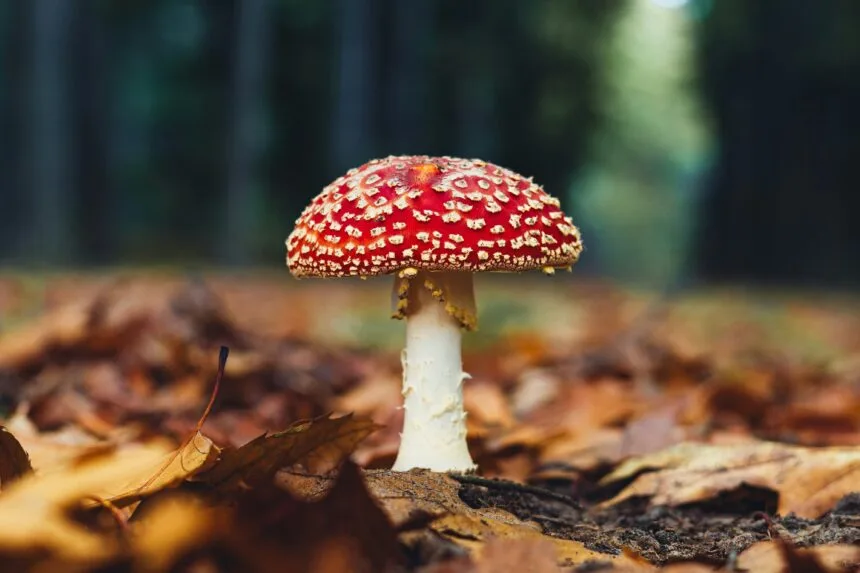
An international team of scientists observing wild primates in Tanzania’s Issa Valley has found that the role of mushrooms in human evolution may be far more significant than previously thought. According to the study published in the journal Ecology and Evolution, researchers gathered more than 50,000 feeding observations over four years on chimpanzees, baboons, and red-tailed monkeys.
Primate Dietary Patterns and Resource Sharing
The research revealed that while all three species consume wild fungi regularly, their feeding strategies differ substantially. Chimpanzees and red-tailed monkeys rely on mushrooms primarily as a fallback food during periods of fruit scarcity, with mushrooms accounting for roughly 2 percent of their overall diet.
In contrast, baboons forage for mushrooms year-round, at times prioritizing them over other foods. During certain months, mushrooms constituted more than one-third of the baboons’ total diet. Scientists believe this distinct dietary partitioning helps reduce direct resource competition and conflict among primate species sharing the same habitat.
Implications for Early Hominids and Archaeological Evidence
The flora and fauna of the Issa Valley closely resemble the savanna-woodland mosaic where early human ancestors evolved. These observations offer valuable clues into how early hominids adapted to environments with limited fruit availability. The active use of mushrooms by modern primates suggests that species such as australopithecines or Homo habilis likely incorporated them into their diets as well.
Archaeological evidence supports this hypothesis, as traces of mushrooms have previously been identified in the dental calculus of Neanderthals dating back roughly 40,000 years. Researchers emphasize that because fungi rarely fossilize, the pivotal role of mushrooms in human evolutionary history has long been underestimated.