
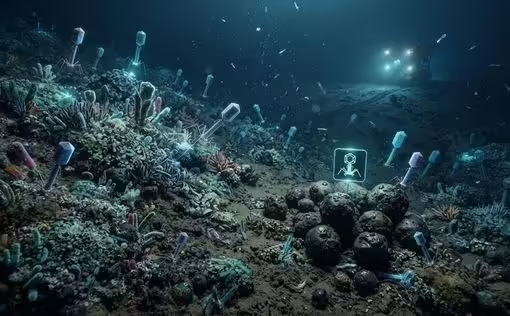
Researchers from Chongqing University in China have identified an extensive microbial ecosystem at the bottom of the Pacific Ocean, uncovering thousands of viruses previously unknown to science. By analyzing more than 60 deep-sea sediment samples collected from the Clarion-Clipperton Zone between Hawaii and Mexico, the team identified 11,742 distinct viruses, 11,662 of which had never been recorded in scientific catalogs.
Genetic Uniqueness and Ecological Roles
Genetic analysis revealed that only 4 percent of the detected viral protein sequences match entries in existing international databases, underscoring the distinct nature of the benthic ecosystem.
The researchers confirmed that the identified viruses pose no threat to human health. The vast majority belong to the class Caudoviricetes, commonly known as bacteriophages. These specialized viruses exclusively infect bacteria, regulating microbial populations and facilitating metabolic processes on the ocean floor.
Nutrient Cycling and Deep-Sea Mining Concerns
These deep-sea viruses play a critical role in the global cycles of carbon, nitrogen, phosphorus, and sulfur. By breaking down bacterial cells, they release vital nutrients back into the marine environment and transfer functional genes that help microbes survive toxic sediment conditions.
The discovery carries heightened significance amid growing interest in industrial deep-sea mining. The Clarion-Clipperton seabed contains billions of mineral nodules rich in nickel, cobalt, and manganese—key metals used in electric vehicle batteries. The researchers plan to use this new viral catalog as a vital ecological baseline to assess and monitor environmental impacts before any commercial seabed extraction begins.