


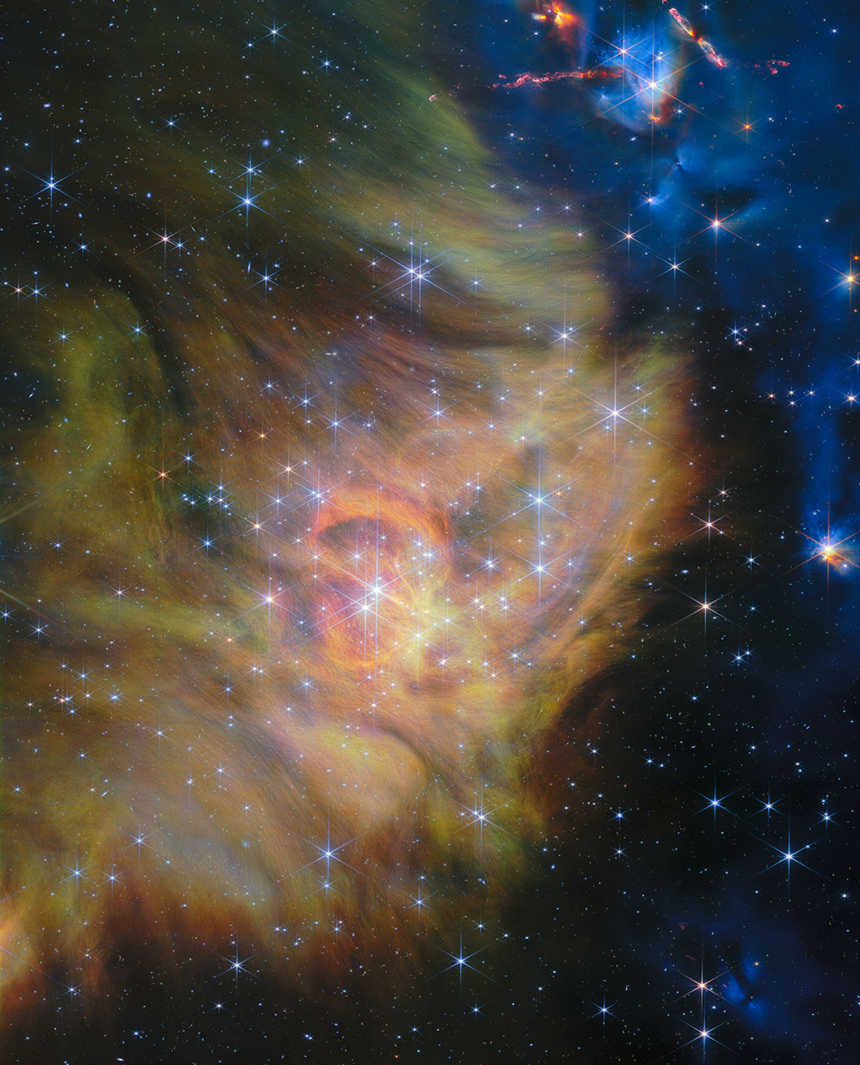
What are the tiny brown dwarfs discovered in IC 348?
NASA’s James Webb Space Telescope has identified tiny brown dwarfs with masses as low as twice that of Jupiter within the IC 348 star-forming region, located 1,000 light-years from Earth. These objects, representing only 0.19 percent of the Sun’s mass, are the least massive brown dwarfs ever discovered. Their existence challenges existing scientific models regarding the lower limits of star formation and how these celestial objects develop.
Brown dwarfs are celestial bodies that form from collapsing gas clouds but lack the mass to sustain the hydrogen fusion that powers typical stars. By using the telescope's advanced infrared instruments, researchers detected these faint, warm objects and identified a unique hydrocarbon signature in their atmospheres, suggesting they may belong to a distinct spectral class.
Why does this discovery matter for space science?
The observations provide critical data on the limits of star formation and potential planet development. One of the newly discovered brown dwarfs appears to possess a disk, indicating that small planets could potentially form around objects that are themselves only the mass of a planet. Additionally, the region contains Herbig-Haro objects, which are luminous structures created when jets from newborn stars collide with surrounding gas and dust.
These findings help astronomers refine their understanding of the star lifecycle and the mysterious processes that govern the birth of objects in our universe.