


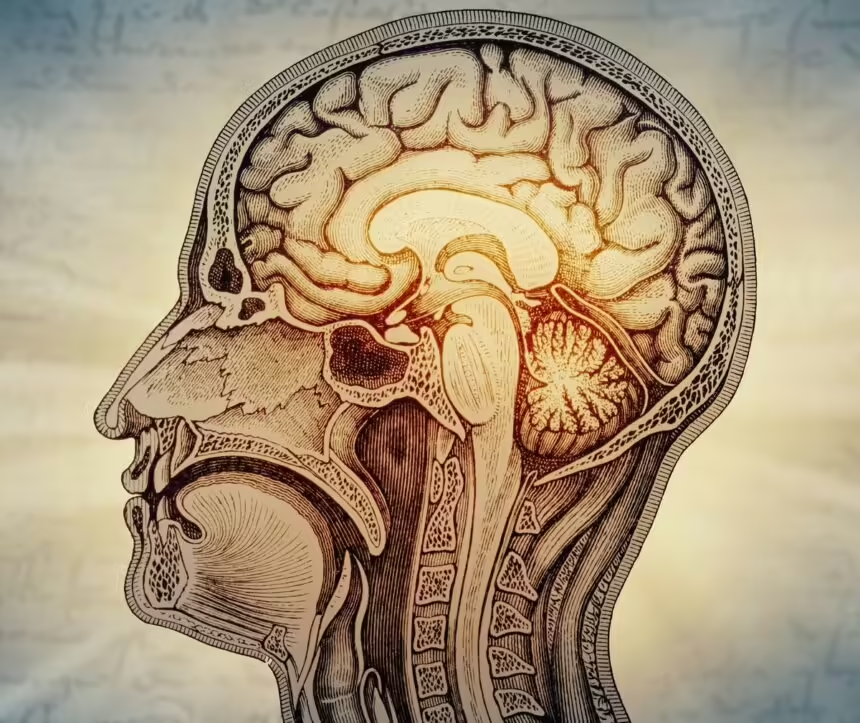
New research published in Nature Neuroscience reveals that the human brain develops from two independent progenitor cell lineages during embryonic growth. Scientists analyzing early embryonic tissues discovered that the forebrain and hindbrain follow completely separate genetic pathways, suggesting human brain evolution may have merged two distinct ancestral nervous systems into a single organ over millions of years.
How did the brain develop as two separate parts?
Researchers identified two separate populations of brain progenitor cells that do not share an immediate common precursor in early development. One lineage expressing the Otx2 gene gives rise to the forebrain and midbrain, while another population expressing the Gbx2 gene builds the hindbrain. These independent cell groups maintain different genetic programming and package their DNA differently throughout embryonic growth.
The same dual progenitor patterns appear across other species, including chickens, zebrafish, and acorn worms. This evidence indicates that key milestones in human brain evolution likely involved packing separate sensory and control centers into a single protective structure.
Why does this discovery matter for medical research?
Understanding these separate developmental pathways allowed researchers to successfully turn human pluripotent stem cells into hindbrain motor nerve cells for the first time. Cultivating these specific neurons in a laboratory setting gives scientists a reliable model to study debilitating brainstem conditions, including spinal muscular atrophy and amyotrophic lateral sclerosis, which were previously difficult to investigate.