


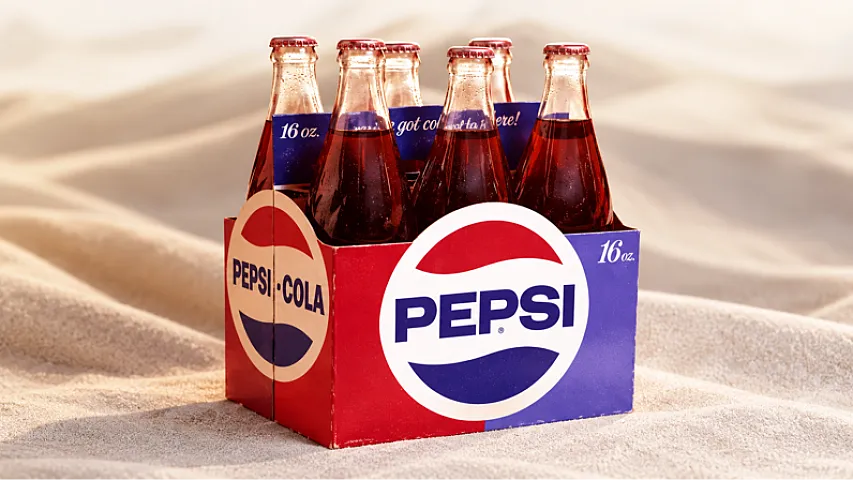
The history of Pepsi Cola, one of the world’s most recognized beverage brands today, began in 1893 in a small pharmacy located in North Carolina, USA. Created by pharmacist Caleb Bradham, the drink was originally named “Brad’s Drink.” In later years, it became famous under the name “Pepsi-Cola” and turned into one of the main competitors of “Coca-Cola.”
As the drink’s popularity grew, the pharmacist decided to change its name, which resulted in the creation of the name “Pepsi-Cola.”
In the summer of 1903, Bradham officially registered the name and began selling the drink’s syrup to pharmacies and other vendors in North Carolina.
By 1910, “Pepsi” was already being sold in 24 states.
Pepsi Was One of the First Brands to Use Celebrities
In its early years, “Pepsi” was primarily presented as a digestive aid. Company advertisements emphasized that the drink invigorated a person and aided digestion.
However, the company later changed its advertising strategy and began utilizing the popularity of celebrities. In 1913, Barney Oldfield, a famous auto racing driver of the era, became the advertising face of “Pepsi.”
This step laid the foundation for the company’s future advertising strategy. In subsequent decades, “Pepsi” continued to use various celebrities to promote its product.
The Company Went Bankrupt
The first major success of “Pepsi” did not last long. During the years of the First World War, Caleb Bradham accumulated a large supply of sugar, believing that sugar prices would rise even further.
However, contrary to expectations, sugar prices dropped. As a result, the company was left with a large volume of sugar purchased at a high price, and “Pepsi-Cola” went bankrupt in 1923.
In 1931, after passing through the hands of several investors, the company was acquired by Loft Candy. Charles Guth, the head of the company, tried to turn “Pepsi” into a successful brand once again.
The 5-Cent “Pepsi” Changed Sales
Charles Guth changed the recipe for “Pepsi” and began selling the drink in 12-ounce bottles for just 5 cents. At that time, “Coca-Cola” was offering a 6-ounce bottle for the same price.
Thus, “Pepsi” began offering consumers twice the volume of beverage for the same price.
This strategy by the company brought unexpected success. A radio commercial jingle titled “Nickel Nickel” became one of the first nationally broadcast advertising jingles in the USA. Later, this advertisement was adapted into 55 languages and rated as one of the most effective advertisements of the 20th century.
A New “Pepsi” Era Began After the War
During the Second World War, the Pepsi company tried to establish a stable supply chain regarding sugar. The drink also began to gain recognition among US military personnel serving in various parts of the world.
After the war, the company shifted its focus to the new generation. In the 1950s, company head Al Steele married actress Joan Crawford. Crawford also participated in promoting “Pepsi” at various events and in meetings with the company’s bottlers.
In the early 1960s, the company made youth one of its primary target audiences and launched the “Pepsi Generation” advertising campaign. In 1964, “Pepsi” also launched its first diet drink.
“Pepsi” Stopped Being Just a Beverage Company
In 1964, “Pepsi” acquired the “Mountain Dew” brand. A year later, it merged with snack maker “Frito-Lay.” Thus, the company moved beyond being solely a carbonated soft drink business and entered the broader food and beverage sector.
By the 1970s, “Pepsi” was already competing fiercely with “Coca-Cola” in the US carbonated soft drink market. In 1974, “Pepsi” went down in history as the first US product authorized for production and sale in the Soviet Union.
Michael Jackson Became the Face of “Pepsi”
In the 1980s, the company expanded its advertising strategy even further. In 1984, “Pepsi” began collaborating with Michael Jackson, who was then at the peak of the success of his “Thriller” album.
Commercials featuring the singer generated immense interest. Afterwards, the company attracted well-known figures such as Tina Turner, Joe Montana, and Michael J. Fox to its advertising campaigns.
“Pepsi’s” advertising strategy also impacted its rival “Coca-Cola.” In 1985, “Coca-Cola” changed its classic formula and introduced a new product called “New Coke.” However, the negative reaction to the product forced the company to return to the classic recipe.
“Crystal Pepsi” Did Not Bring the Expected Success
“Pepsi” itself experienced a failed product experiment later on as well.
In 1992, the company launched a new drink called “Crystal Pepsi” to the market. The product was specifically meant to attract the attention of the new generation of consumers. However, the expected result was not achieved, and the product was discontinued shortly after.
“Pepsi” Today
Today, “Pepsi” is not limited to just the classic carbonated soft drink. The brand has different product and flavor variants in various countries, including “Diet Pepsi,” caffeine-free drinks, and beverages with various flavor additions.
In subsequent years, the company entered various directions of the beverage and food market. “Gatorade” sports drinks, “Aquafina” packaged water, “Amp” energy drinks, and Starbucks products are examples of this expansion.
Thus, a drink concocted in a small pharmacy in North Carolina in 1893 has turned into one of the world’s most recognized products over more than 130 years, thanks to advertising, celebrities, and a strong brand strategy.
Although bankruptcy, resurgence, successful advertising campaigns, and unsuccessful products alternated in the history of “Pepsi,” the brand has maintained its position in the global market by preserving its competition with “Coca-Cola.”