


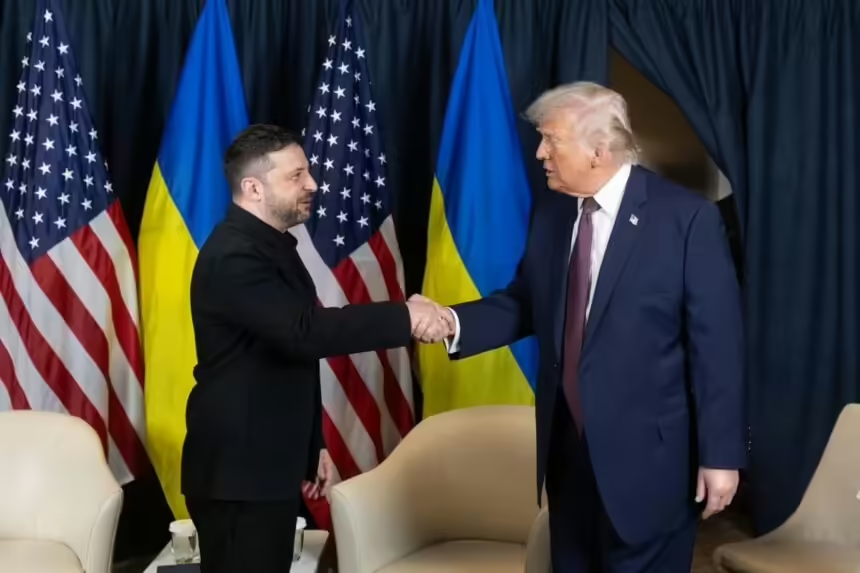
Relations between Donald Trump and Zelensky have grown increasingly tense following recent public statements over the conflict. US President Donald Trump accused Ukraine of striking Russian oil refineries and driving up global fuel prices, arguing that Ukraine needs a “new president.” Ukrainian leadership promptly rejected the proposition, emphasizing that constitutional authority rests entirely with Ukraine’s citizens.
Kyiv’s Response and Terms for Ceasing Energy Strikes
Ukrainian Foreign Minister Andrii Sybiha responded by declaring that only the Ukrainian people possess the legitimate right to elect their leader. In turn, President Volodymyr Zelensky warned that Ukraine will halt attacks on Russian oil refineries only on the condition that Russia stops bombing Ukrainian energy infrastructure. Zelensky also stated that conducting legitimate national elections requires a ceasefire lasting at least 60 days.
Unverified “Energy Truce” and Continued Bombardment
As reported by Miraz.TV citing The New York Times, neither Kyiv nor Moscow has confirmed Trump’s claim that both parties reached an agreement on an “energy ceasefire.” Underscoring the gap between rhetoric and reality on the ground, Russian forces struck a power plant in Kharkiv immediately after the assertion. Trump had previously announced on his Truth Social account that an “energy truce” halting attacks on critical energy facilities was underway.
European Pushback and Domestic Cohesion in Ukraine
Simultaneously, the US plan to ease sanctions on Russian diesel fuel met swift opposition from European leaders, notably drawing sharp criticism from Germany and European Union Foreign Affairs Chief Kaja Kallas.
In Ukraine, Trump’s statements are predominantly viewed through the prism of domestic American politics. Analysts and citizens observe that external pressures of this nature are serving to rally even domestic critics around the country’s wartime leadership.