


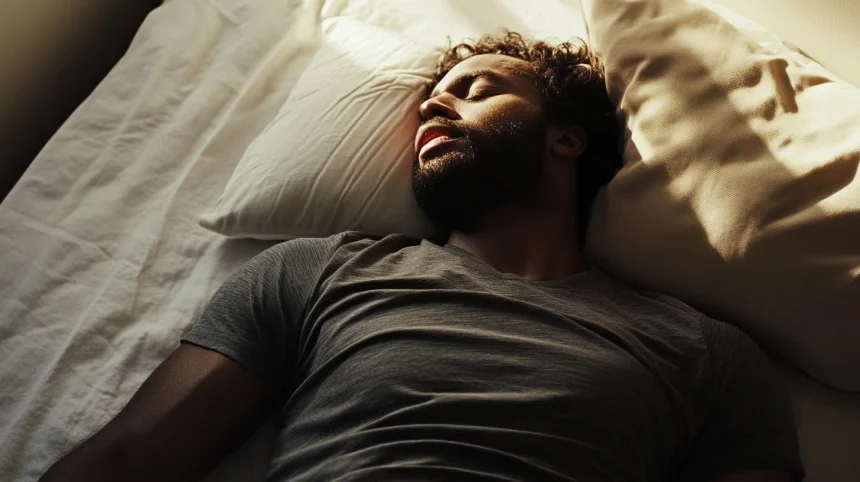
Even if you fall asleep easily after drinking coffee and wake up feeling rested, caffeine can quietly undermine the quality of that sleep. Miraz.TV reports that after conducting large-scale research, scientists at Wrocław Medical University concluded that caffeine affects not only sleep duration and the time it takes to fall asleep, but also brain function after a person has fallen asleep.
Caffeine Reduces Slow-Wave Activity in Deep Sleep
Specifically, the researchers found that caffeine can reduce slow-wave activity and shift the EEG (electroencephalogram) pattern toward a more wakeful state. Slow-wave activity is considered a key marker of deep sleep, which is necessary for physical recovery, energy restoration, and normal brain function.
Eight Hours in Bed Does Not Guarantee Full Recovery
As a result, a person may stay in bed for eight hours without waking during the night and still experience less complete recovery. Moreover, the subjective feeling of good sleep does not always reflect its actual quality.
Caffeine’s Effects Vary From Person to Person
Caffeine’s effects vary individually and depend on genetics, metabolic rate, age, stress level, chronic fatigue, the amount of caffeine consumed, and when it is consumed. For some people, even coffee drunk in the morning can affect the quality of sleep at night, especially with regular high caffeine intake.
Poor Recovery and Another Dose: The Risk of a Vicious Cycle
The scientists also warn about a possible vicious cycle: if caffeine helps someone cope with daytime fatigue while disrupting nighttime recovery, that person may feel even more tired the next day and turn to stimulants again.