
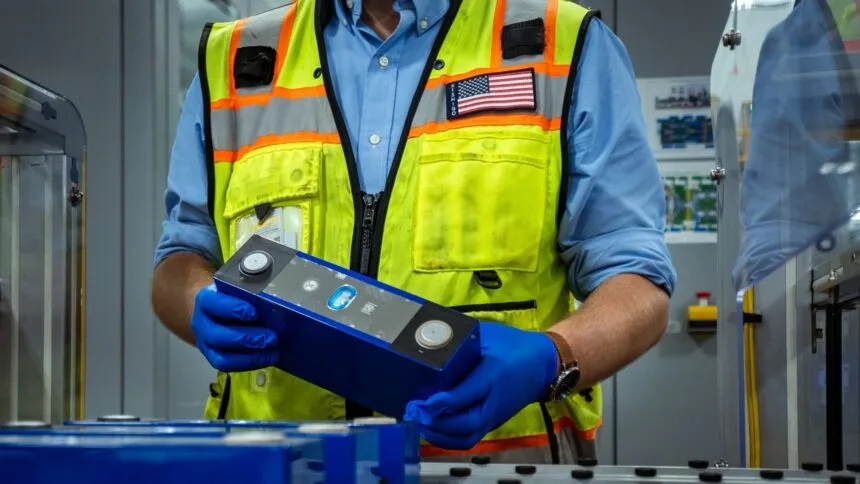
Ford Motor announced on November 18 that it has started domestic manufacturing and initial shipments of battery cells from its $3 billion plant in Marshall, Michigan. Cell production began in October, with the cells destined for prototypes of the planned Fathom small electric pickup.
The automaker manufactures the cells using licensed technology from Chinese battery firm CATL. The chemistry relies on lithium iron phosphate, known as LFP, which originated in the United States before widespread commercialization in China.
Technology Licensing and Federal Scrutiny
Ford defended its use of foreign intellectual property as a path to speed up domestic manufacturing. "If we want to get to being able to produce affordable EVs in the United States, we need to also do it the fastest way possible," Alan Clarke, Ford vice president of advanced development projects, said during a plant tour on November 17. Clarke added, "CATL being the biggest in the world means that they're the best supplier to get us that technology and help us learn ourselves how to produce LFP cells."
U.S. Transportation Secretary Sean Duffy and several lawmakers raised concerns over ties to CATL, with Duffy writing to Ford Chief Executive Jim Farley in September that Ford's ties to Chinese companies could harm Ford and the U.S. auto industry. The White House commended Ford's domestic jobs and manufacturing the following day.
Plant Capacity and Vehicle Timetable
The roughly 2 million-square-foot facility, located about 100 miles west of Detroit, is highly automated. Ford says the plant has only begun certifying its manufacturing processes.
At full scale, the site is expected to produce 40 cells each minute, or 20 gigawatt-hours per year across electric vehicles and energy storage. The expected annual capacity is half the original maximum target of 40 gigawatt-hours, as Ford and the wider industry have scaled back their electric-vehicle efforts. Ford plans to expand cell output in 2027 before the Fathom pickup makes its targeted debut in the fourth quarter of that year.