


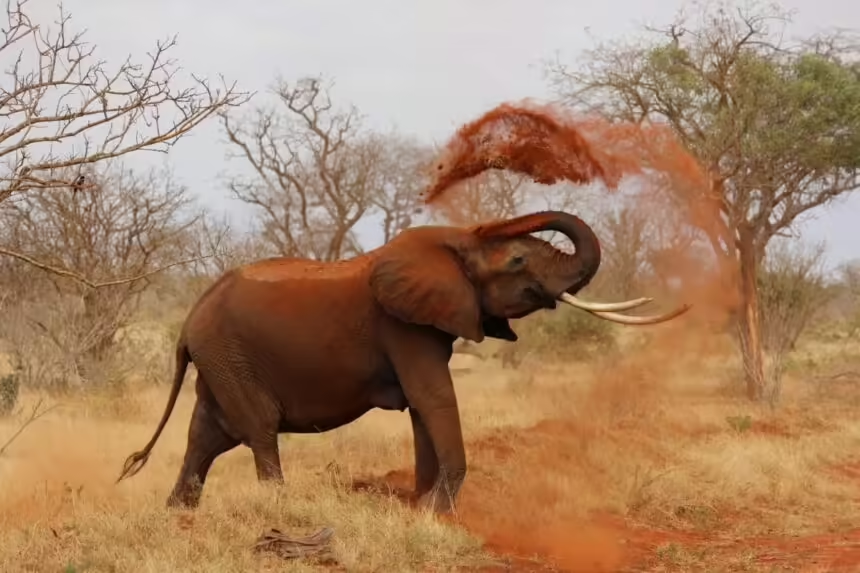
A long-term scientific investigation has shown that the profound elephant carcass impact reshapes local ecosystems for at least eight years after the animal dies. Conducted in South Africa’s Kruger National Park, the research highlights how large mammal decomposition drives decades of ecological renewal.
Tracking the Decomposition of Alexander the Elephant
According to reporting by Discover Wildlife, the study originated in 2009 following the natural death of a massive bull elephant named Alexander.
Dr. Dave Thompson, a scientist with the South African Environmental Observation Network (SAEON), and his colleagues systematically monitored the site for years. Their team tracked the carcass’s influence on soil properties, microbial populations, surrounding flora, and herbivore feeding patterns.
Soil Chemistry Shifts and Vegetation Succession
During the initial stages of decomposition, soil nitrogen levels surged up to 3,000 times higher than background concentrations. This intense chemical influx initially scorched nearby vegetation and sharply reduced the diversity of soil bacteria.
As the soil stabilized over the following seasons, nutrient-rich conditions favored the emergence of fast-growing grass species. This lush grazing patch subsequently attracted a succession of large herbivores, whose dung continually fertilized the ground and renewed the nutrient cycle years after Alexander’s demise.
A Lasting Ecological Legacy
Izak Smit, a scientist representing South African National Parks (SANParks), noted that the findings illustrate how contemporary landscapes are frequently sculpted by ecological legacies of the past.