
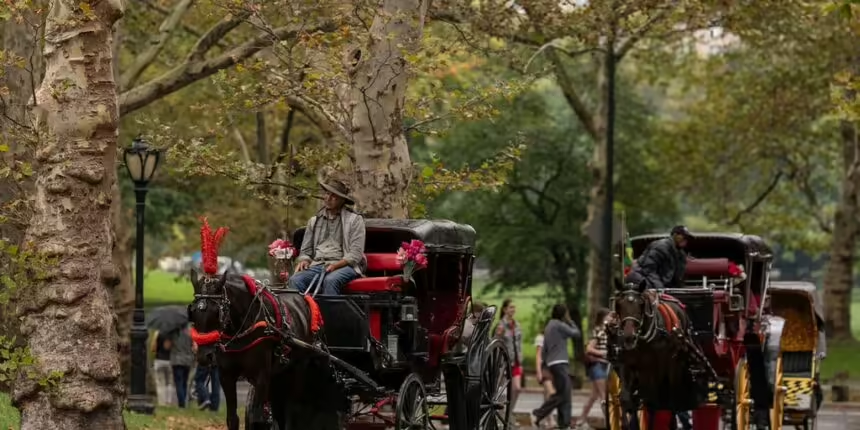
The New York City Council voted 40-7 on Thursday to approve Romanch's Law, enacting a NYC horse carriage ban that will phase out horse-drawn carriages in Central Park by June 1, 2028. The measure impacts more than 150 active drivers and workers while drawing strong support for the storied American cultural tradition from President Donald Trump.
What led to the NYC horse carriage ban?
Lawmakers approved the phaseout following the tragic death of 18-year-old Romanch Mahajan, who died in June after being thrown from a runaway carriage in Central Park. The legislation gives the mayoral administration until mid-2028 to establish job training, counseling, and transition initiatives for more than 150 industry workers, while animal advocacy groups have pledged financial aid to help retired carriage horses find safe care.
President Trump Champions Historic City Tradition
President Donald Trump strongly defended the nearly 170-year-old horse-drawn carriage industry as a quintessential New York experience that should be preserved. Trump emphasized the cultural significance of the carriages for visitors and residents alike, expressing regret that political moves threaten an iconic symbol of the city. Meanwhile, labor representatives announced legal action in federal court to protect active drivers and uphold their established working rights.
The Transport Workers Union declared plans to seek a temporary restraining order in federal court, arguing that drivers were not properly supported. City Council Speaker Julie Menin stated that lawmakers strengthened protections for affected personnel and remain confident in defending the law. Under the approved bill, horses will be shielded from slaughter after retirement, concluding a long debate over Central Park tourism.