
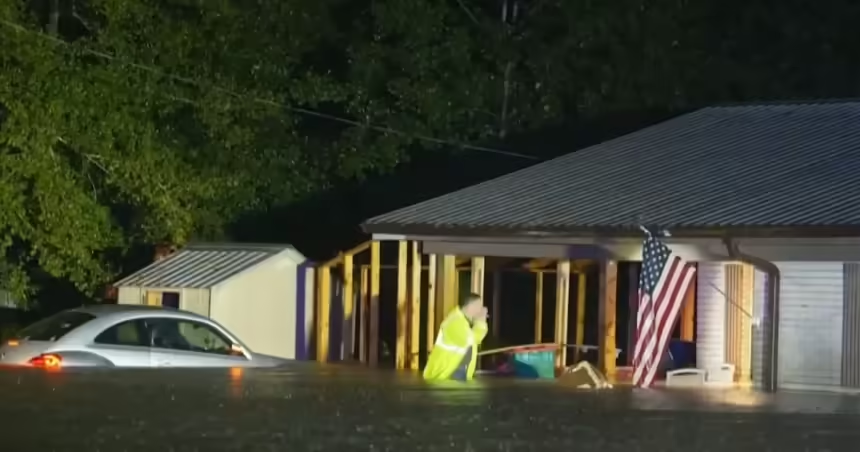
Emergency responders deployed National Guard helicopters, boats, and amphibious craft in San Juan County, New Mexico, pulling residents from rooftops and houses containing up to four feet of water.
"We’re picking people off of roofs and pulling people out of houses that have 3 or 4 feet of water in them, and there’s more water coming," said Devin Neeley, a spokesperson for San Juan County emergency management. Runoff also forced untreated sewage into the San Juan River, Neeley confirmed.
In nearby Farmington, New Mexico, officials ordered around 600 households along the San Juan River to evacuate as surge waters entered from Colorado through the Animas River. Farmington Police Chief Steve Hebbe claimed the surge was a once-in-a-generation occurrence, warning residents that dangerous conditions were advancing.
Downstream on tribal lands, Navajo Nation police evacuated seven families, totaling 30 people, from flooded homes and urged downstream residents to prepare immediate departures for households and livestock. In northeastern Arizona, the Hopi Tribe declared an emergency after severe rains damaged thoroughfares, bridges, homes, and infrastructure.
Multi-State Emergency Declarations
Regional authorities mobilized emergency resources as storm moisture crossed state boundaries. Colorado Governor Jared Polis declared disaster emergencies across 11 counties and deployed the National Guard to support rescues, while Archuleta County sheriff's authorities upgraded a shelter advisory to an evacuation warning.
In Hurricane, Utah, municipal authorities declared an emergency after floodwaters damaged more than 100 residences and recreational vehicles. Arizona earlier recorded baseball-sized hail and a suspected tornado that left at least one person injured.
National Weather Service meteorologists reported that the downpours originated from the remnants of Hurricane Trudy, which transitioned into a slow-moving low-pressure system fueled by warm Pacific waters and strong El Niño conditions. Rainfall totals reached two to four inches across southwest Colorado and southeast Utah, while higher elevations in the San Juan Mountains recorded up to six inches.