


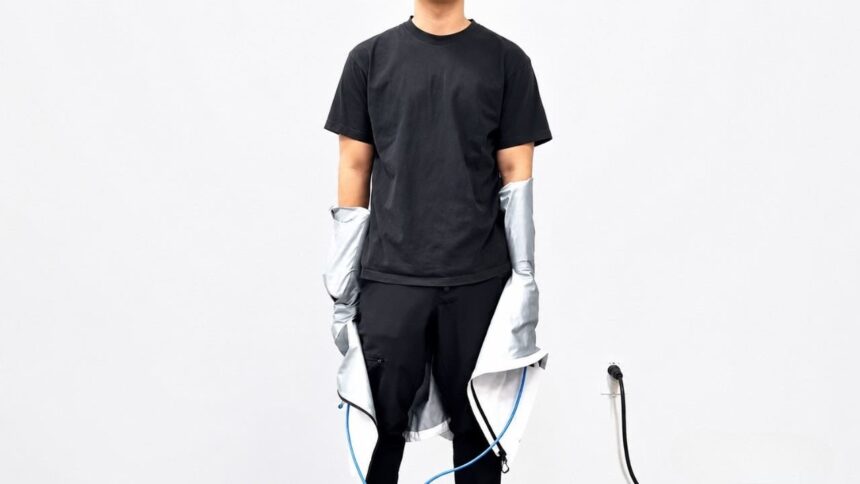
Researchers from KAIST and Stanford have developed innovative self-dressing clothes designed to assist older adults and individuals with limited mobility. The garments, known as Self-Wearing Adaptive Garments (SWAG), utilize soft, air-powered robotic tubes integrated into the fabric to guide clothing into place. This technology aims to enhance independence by simplifying daily routines that often require physical assistance.
How do self-dressing clothes work?
The system uses soft, air-powered robotic tubes embedded directly into the fabric to guide garments onto the body. When activated, air pressure causes these flexible structures to unfold and advance, effectively turning the clothing inside out as it moves. This design allows the garment to follow the wearer's shape while minimizing friction. A jacket can be put on in approximately 13 seconds, while pants take about 21 seconds to position correctly.
Why is this technology important for independence?
For many older adults and people recovering from injuries, dressing can be a physically demanding task that requires significant reaching, bending, and balance. By automating the process, these robotic garments reduce the need for caregivers or family members to assist with daily routines. This innovation supports greater autonomy, allowing individuals to maintain their personal independence at home longer despite challenges with mobility, dexterity, or strength.