


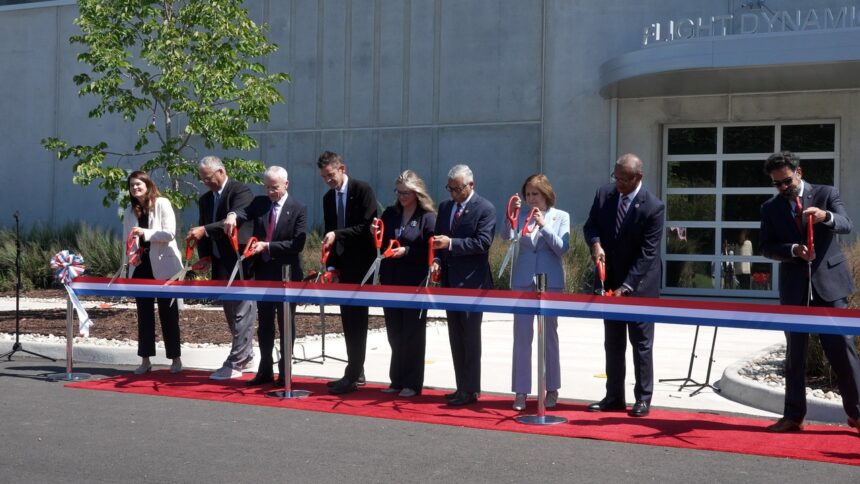
NASA has officially opened the Flight Dynamics Research Facility at the Langley Research Center in Hampton, Virginia, marking the agency's first major new wind tunnel construction in over 40 years. This advanced facility is designed to test cutting-edge technology for upcoming space exploration missions, including planned trips to the Moon, Mars, Venus, and Titan, ensuring the United States maintains its leadership in aeronautics.
What is the Flight Dynamics Research Facility?
The Flight Dynamics Research Facility is a state-of-the-art testing center at NASA's Langley Research Center featuring a vertical test section 20 feet in diameter and 24 feet tall. Built to replace aging infrastructure, the facility utilizes four 750-horsepower motors to generate wind speeds up to 117 mph. This modernization allows engineers to simulate flight conditions and test scale models for future spacecraft and aircraft development.
Why is this facility important for space missions?
This new wind tunnel provides critical capabilities for testing the safety and performance of vehicles designed for extreme environments, such as Venus and Titan. By offering significantly higher wind speeds and more efficient testing methods than previous facilities, it enables researchers to evaluate stressful flight conditions for rockets, X-planes, and autonomous vehicles. The facility will play a vital role in supporting every future space mission that requires atmospheric travel.