
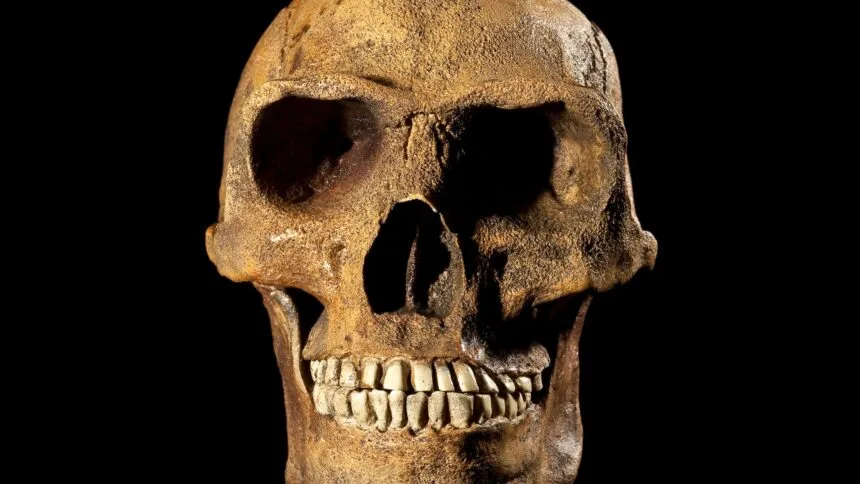
A new Homo erectus fossil discovery in South Africa confirms that the upright human ancestor appeared two million years ago, roughly 200,000 years earlier than previously confirmed for adults. Researchers identified the DNH 127 adult skull fragment at the Drimolen Main Quarry near Johannesburg, reshaping scientific understanding of when our direct lineage first established itself on the African landscape.
Why is the Drimolen fossil dating significant?
The discovery provides physical evidence that Homo erectus adults lived in southern Africa two million years ago, pushing back the adult fossil timeline by about 200,000 years. Previous finds from the same era only included juvenile remains, which made definitive comparisons difficult. The newly examined adult fragment confirms that this upright ancestor coexisted alongside other hominin species far earlier than older records confirmed.
Scientists dated the bone using physical characteristics and radioactive geological methods after analyzing 18 specimens gathered from the quarry site.
Fossil Evidence Shows Parallel Evolution
Fourteen fossils analyzed at the site belonged to Paranthropus robustus, an ancient human relative with heavier jaws and bigger teeth adapted for chewing tough foods. While Paranthropus robustus outnumbered Homo erectus by more than ten to one at the quarry, the new specimens reveal critical micro-evolutionary changes in jaw structure, illustrating how two distinct hominin lineages evolved different physical traits simultaneously.
Archaeologists noted that while Paranthropus robustus eventually vanished, the surviving lineage highlighted by this Homo erectus fossil discovery ultimately gave rise to modern humans.