


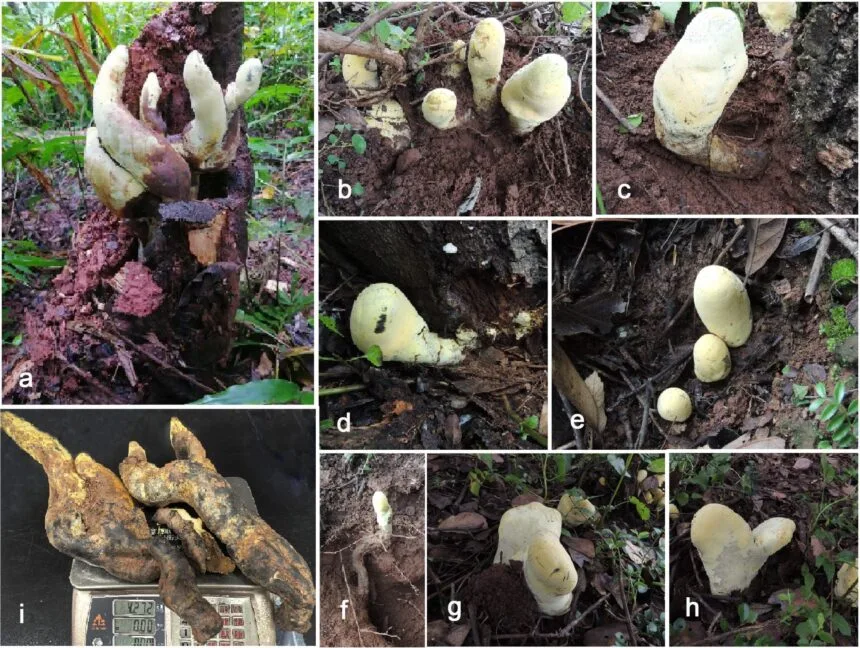
Mycologists in Yunnan Province, China, have identified a massive new species named Dianjunus rex, marking a remarkable giant fungus discovery that links back to prehistoric ecological upheaval. The organism produces fruiting bodies reaching 50 centimeters in height, offering crucial evolutionary insights into how ancient fungi flourished following global extinction events.
What makes Dianjunus rex unusual?
Dianjunus rex stands out due to its towering club-like fruiting bodies, which measure up to 50 centimeters tall and can weigh as much as 2.2 kilograms. Found sprouting on decaying oak roots, it represents the largest known member of the Ascomycota phylum. Researchers explain that its immense height likely evolved to help disperse reproductive spores above forest debris.
How did the species emerge after asteroid impact?
Genetic analysis indicates that the Dianjunaceae family split from close relatives roughly 65 million years ago, occurring just one million years after the Chicxulub asteroid impact wiped out three-quarters of life on Earth. The widespread collapse of global forests generated vast quantities of decaying plant matter, creating an ideal ecological boom for wood-rotting decomposers to rapidly expand and diversify.
Published in Frontiers in Fungal Biology, the research highlights how post-impact environmental shocks reshaped fungal evolution across East Asian forests. By examining surviving specimens, scientists can better reconstruct how this giant fungus discovery connects modern biodiversity to the catastrophic forces that redefined planetary ecosystems millions of years ago.