


What was found in the Chimú tomb?
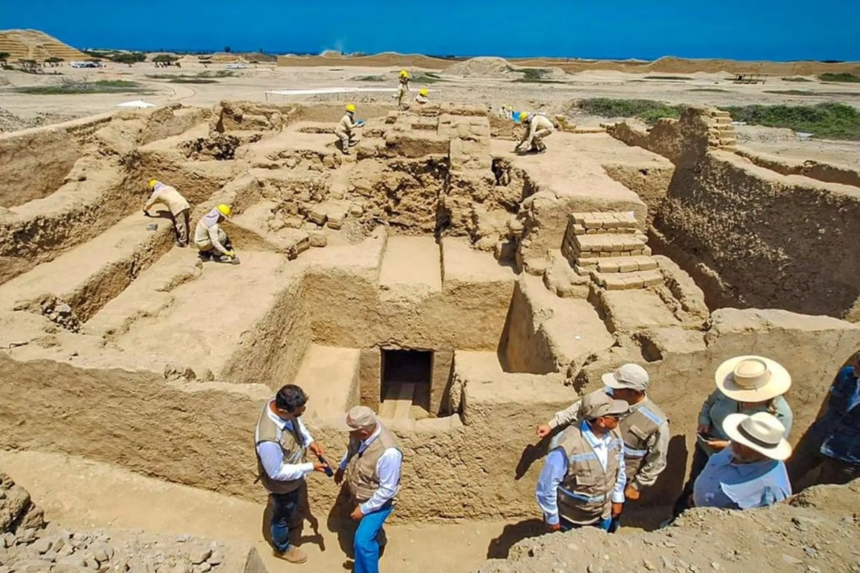
Archaeologists in Peru have discovered an undisturbed 600-year-old mausoleum at the Chan Chan site, the former capital of the pre-Inca Chimú civilization. The tomb contains the remains of at least 38 individuals and a collection of high-status funerary goods, including gold and copper artifacts, metal weapons, and textiles. This find is significant as it is the first time researchers have accessed an almost entirely intact elite Chimú tomb.
The mausoleum features a central chamber and two flanking side rooms. Inside the main chamber, experts identified a single individual with traces of red pigment on their skull, possibly cinnabar. While some bones were missing, researchers suggest this indicates the remains were likely moved or reburied, a common practice in ancient Andean societies. The site remains largely unexplored, with only about 7 percent of the total capital excavated to date.
Why is this discovery important for history?
The discovery provides unprecedented scientific data on Chimú social hierarchies and funerary customs, which were previously understood only through looted items and private collections. By studying this untouched site, researchers hope to gain new insights into the lives of elite individuals and the cultural practices of the civilization that thrived in northern Peru between 900 and 1470.
The tomb dates to the period surrounding the Inca conquest of the region. Because the site remained hidden beneath layers of sand and stone, it escaped the attention of both colonial and modern looters. Experts believe the ongoing excavation of the citadel will continue to reveal more about the Chimú, who were known for their advanced engineering and complex irrigation networks.