


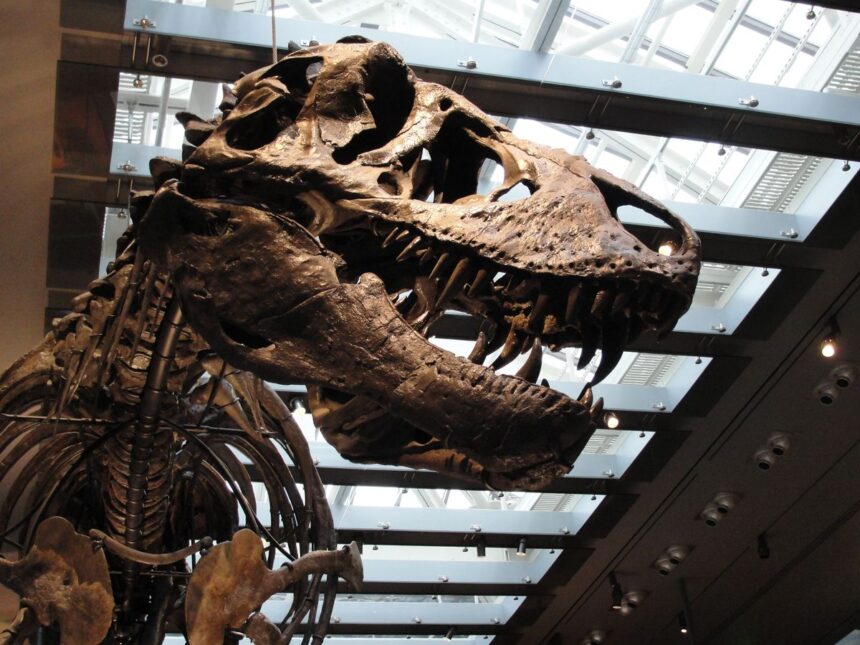
Was the Tyrannosaurus rex warm-blooded?
A study published in Science Advances confirms that the Tyrannosaurus rex was warm-blooded, maintaining an internal body temperature of approximately 97 degrees Fahrenheit. By analyzing chemical bonds in fossilized teeth, researchers determined the dinosaur regulated its own heat, a trait that sets it apart from modern cold-blooded reptiles, which typically operate between 82 and 86 degrees Fahrenheit.
Scientists from the University of California, Los Angeles, examined teeth from the Natural History Museum of Los Angeles County to reach these findings. By measuring carbon and oxygen bonds in the enamel, the team calculated the temperature at which the teeth formed. They verified these results by comparing them against an ancient crocodilian from the same site, which showed a significantly lower body temperature.
How did warm-bloodedness impact dinosaur habitats?
The ability to maintain a stable internal temperature likely allowed the Tyrannosaurus rex to thrive across a vast geographic range, stretching from modern-day Alaska to Mexico. This physiological advantage supported a more active lifestyle, requiring higher food intake to sustain its metabolism. Being warm-blooded enabled the predator to survive in colder environments that would have been inhospitable to cold-blooded species during the Cretaceous period.