


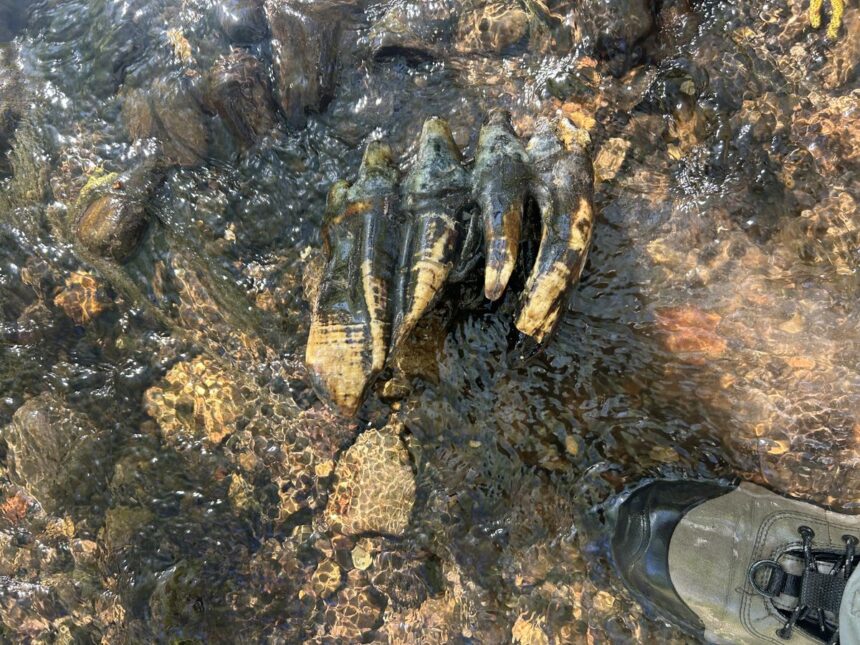
How was the Pacific mastodon tooth discovered?
A geomorphologist conducting a conservation survey in San Mateo County, California, discovered an exceptionally well-preserved Pacific mastodon tooth protruding from a creek bed. After taking photographs, she used a reverse image search to identify the object. Experts later confirmed the find as an upper left molar from a Pacific mastodon, an elephant-like herbivore that went extinct roughly 11,700 years ago.
The discovery occurred while the researcher was surveying the area for protected species. Because the fossil remains in such immaculate condition, paleontologists believe the animal's skull may still be buried nearby in the creek environment.
What happens to the fossil now?
To prevent rapid decay after its removal from the water, the fossil was initially stored in a bucket of creek water. The Midpeninsula Regional Open Space district has since donated the specimen to Stanford University. Researchers there plan to determine the exact age of the molar and create a replica for public education, helping to piece together more information about the region's Ice Age history.
Pacific mastodons were distinct from other species, characterized by narrower teeth and thicker leg bones. They roamed parts of North America alongside other megafauna, such as Columbian mammoths and ground sloths, until the end of the last Ice Age.