


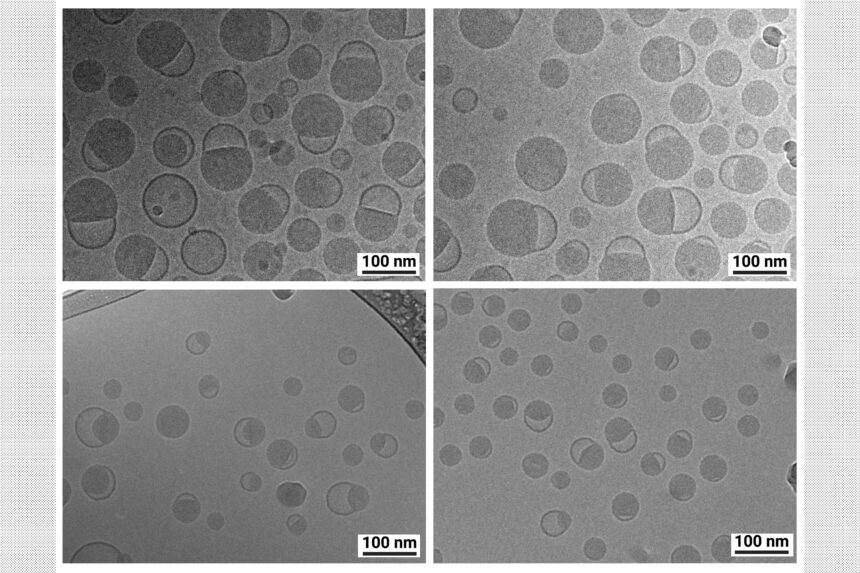
Researchers at the Massachusetts Institute of Technology developed an automated two-step mixing technique to produce lipid nanoparticles for RNA and DNA therapies with greater precision. Announced on September 25, 2026, the breakthrough addresses a long-standing drug delivery challenge by allowing scientists to control particle size and shape, which dictates where therapeutics travel in the body. This innovation in RNA therapy manufacturing could significantly accelerate the development of future vaccines and genetic medicines.
How does the automated mixing system work?
The automated system uses a two-step mixing process paired with a dynamic light scattering device to specify, generate, and measure lipid nanoparticle sizes in real time. By adjusting fluid delay times and buffer concentrations without altering chemical ingredients, the platform automatically steers particle dimensions. Researchers then used data from these experiments to train a machine-learning model capable of predicting exact manufacturing parameters for desired shapes and sizes.
What are the next steps for the technology?
The research team has filed a patent for the automated manufacturing technology and is actively working to commercialize it through a new startup company called BIZON Labs. Funded by the U.S. Food and Drug Administration and the National Cancer Institute, the published study marks a major step forward in making custom-designed genetic medicine production faster and more reliable for future medical applications.