


What is the new once-in-a-century Moon crater?
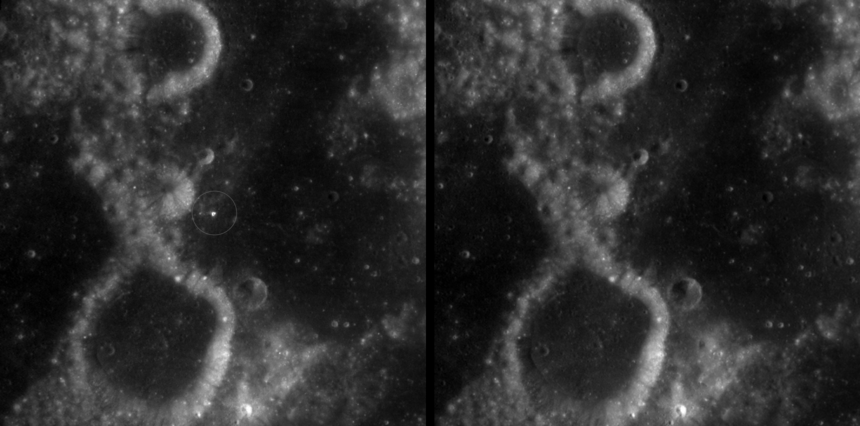
NASA’s Lunar Reconnaissance Orbiter has discovered a significant new impact site on the Moon’s eastern edge, officially named the McGetchin crater. Formed between April 11 and May 22, 2024, by an object the size of a three- to six-story building, the crater measures 728 feet wide and 141 feet deep. Scientists classify this as a rare once-in-a-century Moon crater due to the magnitude of the impact.
The discovery occurred during a routine data-quality check when researchers noticed an unusually large bright spot surrounded by a dark halo. While the orbiter has identified over 1,000 new craters during its 17-year mission, most are caused by microscopic projectiles. The McGetchin crater stands out as the largest newly formed feature of its kind ever documented by the mission.
How does the impact affect the lunar surface?
Beyond the physical crater, the impact created a 4-mile-wide “cold spot” that remains 16 degrees Fahrenheit cooler at night than the surrounding terrain. Researchers determined that the collision “fluffed up” the lunar soil, or regolith, making it less dense and less capable of retaining heat. These findings suggest that large impacts can alter the Moon’s surface properties far beyond the immediate point of collision.
Understanding these surface changes is essential as space agencies plan for future human activity on the Moon. The physical modifications to the regolith could influence how equipment like rover wheels interact with the lunar surface. Scientists continue to use the orbiter’s thermal and imaging instruments to study how such rare, high-energy impacts reshape the lunar environment over time.