


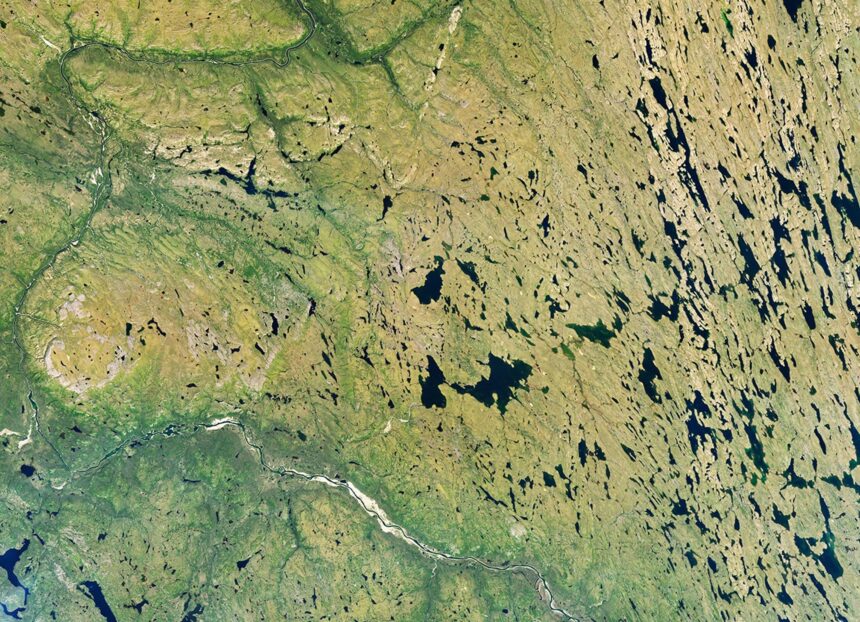
Why do fall colors in Nunavut appear early?
Fall colors in Nunavut emerge early because tundra vegetation, such as willow and birch shrubs, reacts quickly to declining sunlight and cooler temperatures. As plants lose chlorophyll—the molecule used to synthesize food—the green pigment fades. This reveals other pigments like yellow carotenoids and red anthocyanins, creating the vibrant landscape captured by the Landsat 9 satellite on September 6, 2026.
The Coppermine River region is one of the first areas in North America to experience this shift. Research from NASA and South Dakota State University shows that this peak color period is brief, typically lasting a week or less. This rapid transition highlights the unique phenology of far northern ecosystems compared to lower-latitude regions.
How can citizens help track these environmental changes?
The public can contribute to long-term environmental research through the GLOBE North American Phenology Campaign. By recording observations of leaf color changes during the spring and fall, citizen scientists provide valuable data that helps researchers understand how plant life responds to climate and environmental shifts. These contributions are integrated into databases used by scientists to monitor the timing and progression of seasonal changes across the continent.