


How can we fuel a return journey from Mars?
MIT researcher Lanie McKinney is developing a plasma-based system to support a return journey from Mars by converting atmospheric carbon dioxide into oxygen and propellant. By using in-situ resource utilization—the practice of harvesting materials already present on a planet—this technology aims to create essential fuel and life support on-site, eliminating the need for astronauts to carry all necessary supplies from Earth.
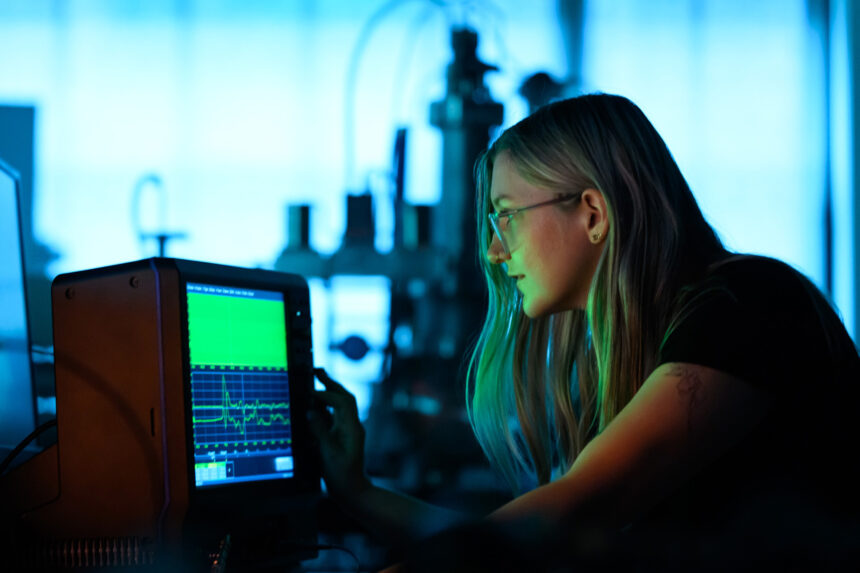
McKinney, a PhD candidate in the Aerospace Plasma Group, is currently testing a reactor that uses cold plasma to break down carbon dioxide. To ensure the system is viable for space travel, she is integrating this reactor with an oxygen-selective membrane to extract pure oxygen efficiently. This research addresses a critical logistical hurdle for long-term human exploration of the Red Planet.
What other space exploration innovations are underway?
Beyond her primary research, McKinney co-led an MIT team that won first prize in Phase 2 of NASA's LunaRecycle Challenge. The team created a system that grinds mission waste into powder for 3D printing and injection molding. She has also explored using lunar regolith to manufacture radiation-shielding bricks, demonstrating how interdisciplinary collaboration is essential for building a permanent human presence in deep space.