


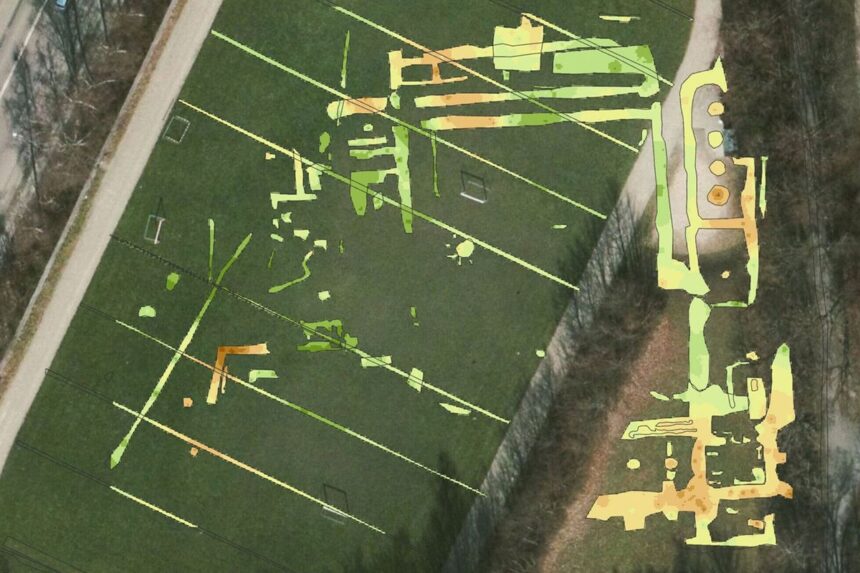
Archaeologists have discovered the ruins of the 13th-century St. Clare’s Convent buried just three feet beneath a soccer field in Roskilde, Denmark. This significant archaeological discovery was made using ground-penetrating radar, which revealed well-preserved remnants of the medieval convent that experts previously believed were lost. The site has remained largely undisturbed since the land began serving as a sports field in 1961.
How were the medieval convent ruins found?
Researchers used ground-penetrating radar (GPR) to scan the site without digging. This noninvasive technology sends radio waves into the earth that bounce off underground structures, creating clear images of the remains. The survey successfully mapped out pillars, rooms, cloisters, a courtyard, and a church, providing a detailed look at the layout of the monastic complex that had been hidden for centuries.
What will happen to the site now?
Following the successful radar survey, archaeologists plan to conduct physical excavations to search for artifacts. The team expects to uncover items such as pottery, animal bones, and religious objects like rosary beads or crosses. Experts also hope that future digs will reveal graves, which could provide significant insights into the lives of the nuns who resided at the convent before it closed during the 16th-century Protestant Reformation.