


Why is this feather found in dinosaur poop significant?
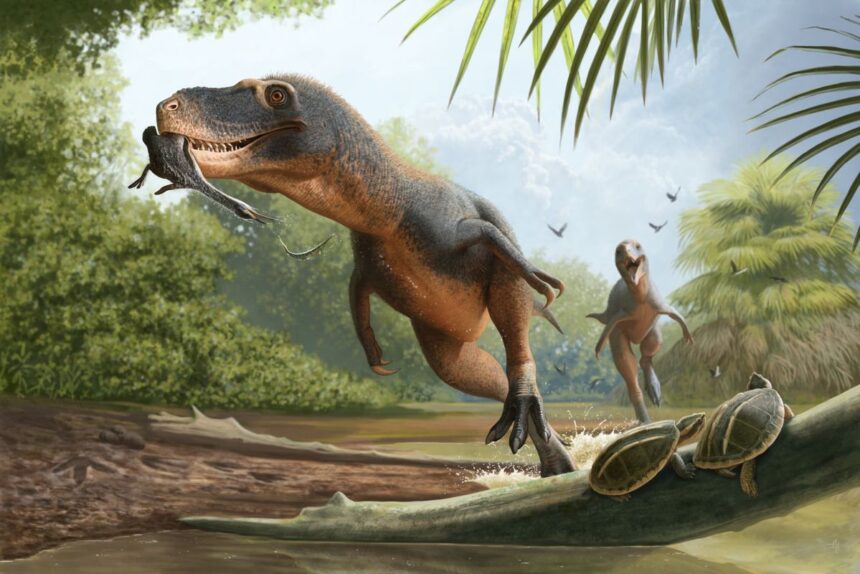
A 66-million-year-old feather found in dinosaur poop provides rare evidence of how ancient birds lived and died. Discovered in Montana, the fossilized coprolite—likely from a young Tyrannosaurus rex—contained 3D-preserved feathers and bone fragments from an extinct aquatic bird. Researchers believe these primitive feathers were sufficient for the warm Mesozoic climate but failed to provide enough insulation during the freezing global winter that followed the asteroid impact.
The specimen features a unique square shaft and sponge-like core, a structure never before seen in Mesozoic-era fossils. Alongside the feathers, the coprolite contained fish scales, revealing that the bird had consumed a gar shortly before being eaten. This discovery highlights the biological limitations that may have contributed to the extinction of specific bird lineages during the Cretaceous period.
Could more fossils be hidden in museum collections?
Scientists suggest that fossilized feces may be an untapped resource for paleontological research. Because few animals can digest keratin, the tough material that forms feathers, researchers believe similar specimens could be common in existing museum collections. By applying non-invasive techniques like micro-CT scans, paleontologists may uncover further evidence of ancient ecosystems and the evolutionary history of birds that lived alongside dinosaurs.