


Lawmakers on Capitol Hill face growing political gridlock over Congress AI regulation after computer scientist Geoffrey Hinton briefed members in Washington on urgent artificial intelligence risks. The warnings highlighted severe safety vulnerabilities and potential economic disruptions, yet the House departed early for recess before advancing critical oversight measures, leaving businesses and the public uncertain about future digital rules.
Why is artificial intelligence oversight stalling?
Congressional action remains stalled because lawmakers disagree sharply on the speed and scope of federal oversight. While some members push for rapid intervention following warnings of catastrophic system failures, House leadership has resisted emergency measures without a broad consensus. Competing political priorities, upcoming elections, and skepticism over heavy-handed technology mandates have created deep resistance against rushing binding rules through both chambers.
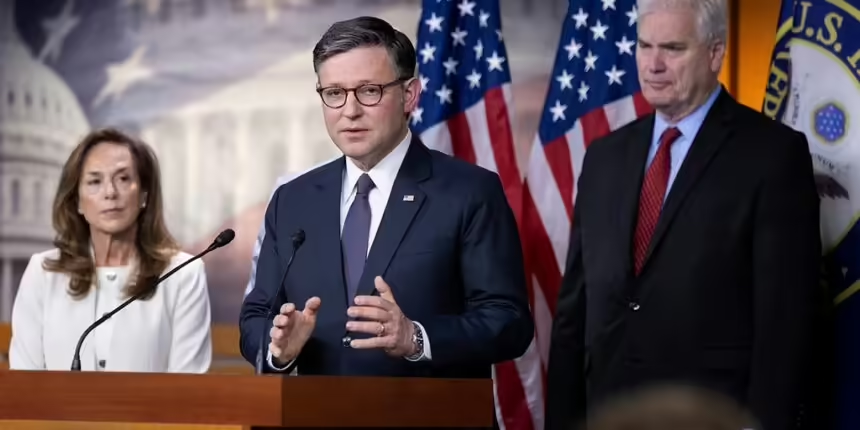
House Speaker Mike Johnson cautioned against moving prematurely, stating that members currently lack clarity on what effective rules should look like. Meanwhile, House members adjourned ahead of schedule, prompting criticism from members seeking immediate safety standards.
What legislative proposals are currently under debate?
Lawmakers have introduced targeted proposals, including bipartisan efforts to shield younger users from automated chatbots and proposals mandating emergency shutdown mechanisms for advanced models. However, procedural blocks have thwarted quick passage, as concerns persist that sweeping mandates could harm domestic technological innovation. These competing views leave federal legislative safeguards on hold while bipartisan negotiations struggle to find common ground.
Senators Josh Hawley and Richard Blumenthal introduced the GUARD Act to protect minors from unregulated chatbots. In another effort, Senator John Kennedy sought immediate approval for a bill requiring an emergency shutoff switch for high-risk software, but Senator Rand Paul blocked the measure over fears of stifling technological development. Until bipartisan compromise emerges, federal progress on Congress AI regulation remains on hold.