


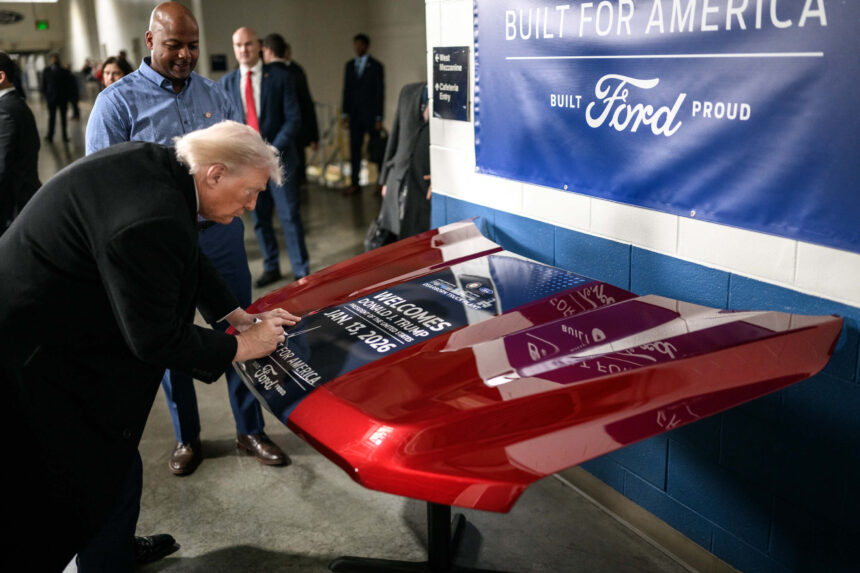
On August 19, 2026, the administration highlighted a significant shift in the American auto industry as major manufacturers accelerate plans to reshore production. Following new trade policy implementations, companies including Ford, Toyota, and General Motors are moving operations back to the United States, aiming to strengthen domestic supply chains and create thousands of new jobs across the country.
How are automakers responding to new trade policies?
Automakers are actively shifting production back to the United States to align with new trade policies. Ford is reshoring Lincoln production, while Toyota and General Motors are investing billions to move manufacturing from Mexico and China to states like Texas, Tennessee, and Kansas. These moves are designed to avoid tariffs and capitalize on domestic capacity, resulting in thousands of new jobs and expanded facilities across the nation.
Additional manufacturers are also expanding their domestic footprint within the American auto industry. Mercedes-Benz is investing $4 billion to increase SUV production in Alabama, while Stellantis is undertaking its largest U.S. investment to boost domestic manufacturing by 50%. Other companies, including Honda, Volvo Trucks, Nissan, Hyundai, and Rolls-Royce, are similarly increasing their output in states ranging from Georgia to Minnesota, signaling a broad industry trend toward localized production.
Which states are seeing new manufacturing investments?
The surge in domestic manufacturing is impacting multiple states, with significant capital flowing into regional hubs. Texas, Tennessee, Kansas, Alabama, Georgia, and South Carolina are among the primary beneficiaries of these investments. Facilities in these locations are being expanded or repurposed to handle the influx of production previously located overseas, reinforcing the administration's goal of rebuilding the American supply chain through targeted trade and economic strategies.