


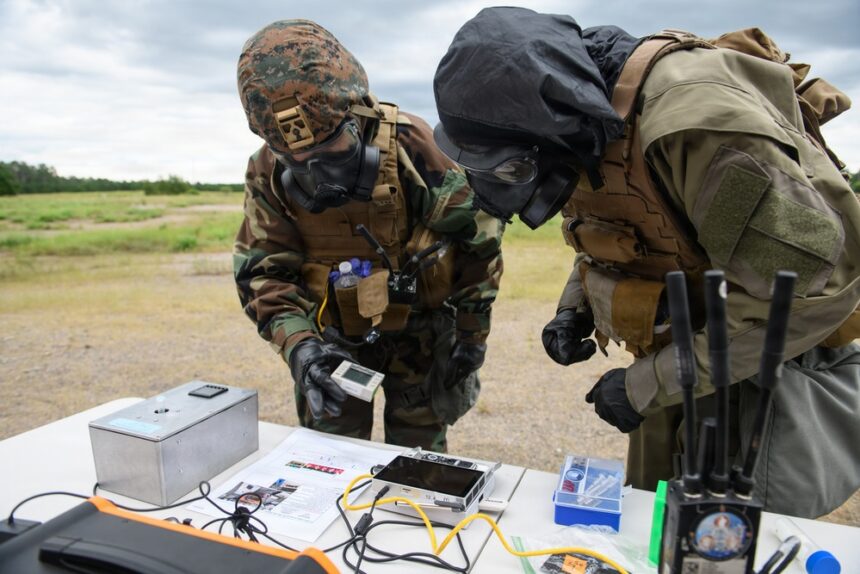
The Joint Science and Technology Office has begun deploying advanced battlefield biodefense technology to help troops identify biological hazards in real-time. Based at Fort Belvoir, the initiative provides "assays on demand," allowing forces to analyze unknown threats directly in theater. This capability eliminates the need to transport samples to off-site laboratories, significantly reducing the time required to detect dangerous pathogens and protect personnel.
How does the new detection system work?
The system utilizes the Far Forward Biological Sequencing program to evaluate field samples in under 90 minutes. Once a threat is identified, the handheld "First Ripple" device can detect over 40 biological targets, including viruses and bacteria, in less than 15 minutes. If a threat remains unknown, a portable synthesizer called Kilobaser creates a custom assay within hours, enabling commanders to rapidly screen for and contain potential biological exposures across the battlefield.
What is the impact on warfighter safety?
By shrinking laboratory capabilities into portable devices, the military can now anticipate emerging threats and respond immediately. This rapid biodetection framework ensures that warfighters receive actionable intelligence regarding biological hazards without waiting for external analysis. These technological advancements are designed to support operations in hostile environments, allowing commanders to make informed decisions that minimize risks to troops and maintain operational readiness against evolving biological dangers in contested areas.