
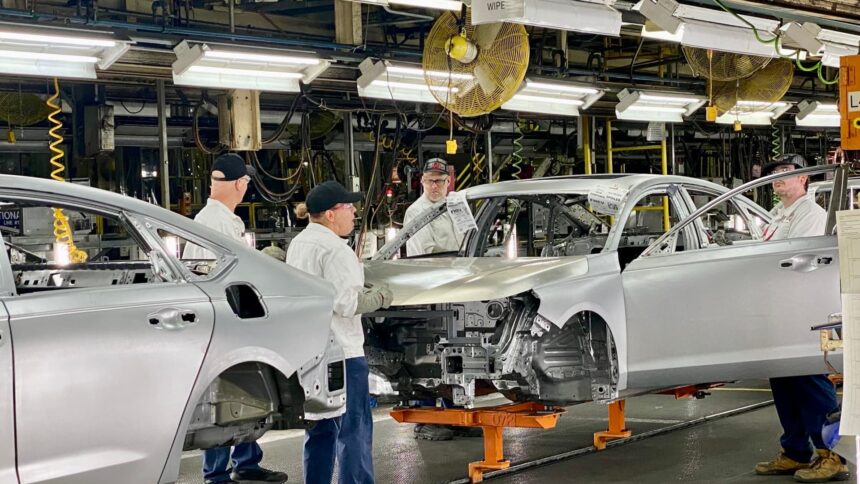
Honda Motor announced plans on Monday to invest $3 billion to construct a new vehicle assembly plant in central Ohio between its existing Marysville and East Liberty facilities. Scheduled to begin commercial vehicle production in 2029, the plant is designed to create over 2,000 direct manufacturing jobs and assemble up to 240,000 vehicles each year.
The investment expands domestic automotive supply chains as car buyers look for more hybrid choices and carmakers localize operations to avoid federal tariffs imposed by President Donald Trump. "This is not simply an investment in another plant. It is an investment in the future of Honda manufacturing in America," Bob Nelson, executive vice president of American Honda Motor Co., Inc., said during the announcement.
Production Footprint Expands Across the Midwest
The planned facility represents Honda's first greenfield mass-production vehicle assembly plant in the United States since its Indiana site opened in 2008. While the new plant will concentrate primarily on hybrid-electric models, the assembly lines will also be equipped to build traditional internal combustion engine vehicles and all-electric models.
State officials noted that Honda is also retooling the Anna Engine Plant and the Honda Transmission Plant-Ohio, raising the company's total new Ohio financial commitment to $3.38 billion and 2,390 jobs. Retooling at the Russells Point transmission facility will raise Ohio hybrid powertrain system production capacity by 250 percent. The Ohio Tax Credit Authority approved a tax credit for the plant project, with additional public support under review through JobsOhio.
Retooling for Tariff Shifts and Consumer Demand
The new capacity will lift Honda's annual passenger and light-duty vehicle production capacity in the United States to roughly 1.3 million vehicles and North American capacity to 1.9 million. Across North America, the manufacturer is updating an assembly line in Alabama for Passport production and a new V6 hybrid engine, expanding transmission manufacturing in Georgia, and restoring engine production in Alliston, Ontario.
The domestic push follows Honda's decision in May 2026 to pause an $11 billion battery and electric vehicle initiative in Canada and drop three planned electric models for the American market. Automakers face an upcoming trade decision point on January 1, when President Trump has threatened to raise tariffs on Canadian-made motor vehicles and parts from 25 percent to 50 percent if no bilateral trade agreement is finalized.