


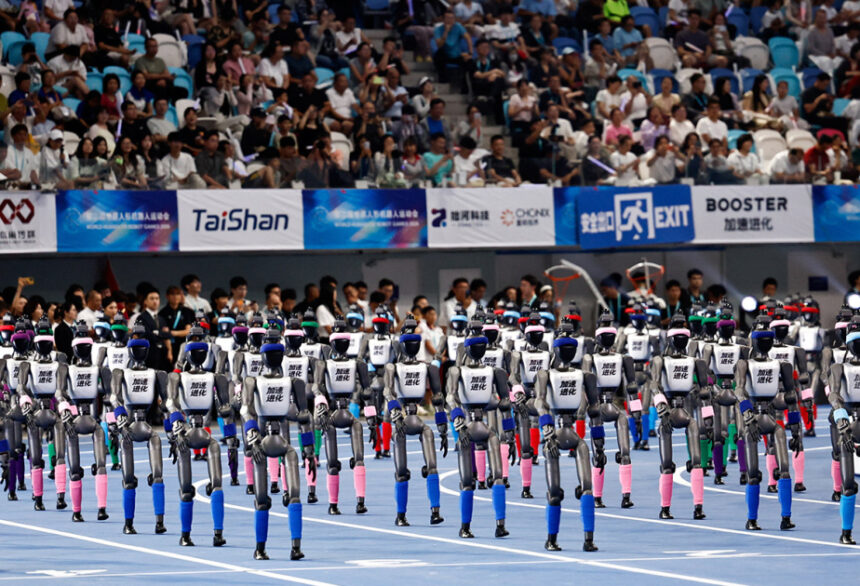
The 2nd World Humanoid Robot Games officially opened in Beijing this Saturday, drawing 666 teams and 2,056 robots from 16 countries. Held at the National Speed Skating Oval, the five-day event showcases significant advancements in robotics technology through 51 distinct events, ranging from competitive sports to complex scenario-based challenges designed to test mobility, balance, and real-world task execution.
What does the competition involve?
The competition features 51 events, including 30 competitive sports and 21 scenario-based challenges. These activities are designed to rigorously test the mobility, coordination, and balance of the participating robots. By simulating real-world environments, the games provide an international platform for research institutions and robotics companies to demonstrate their latest technological breakthroughs and practical applications in the field of humanoid robotics.
Advancements in robot mobility
A major highlight of the event is the rapid progress in athletic performance, exemplified by a Unitree humanoid robot. During the games, the robot reportedly achieved a top speed of 12.66 meters per second, surpassing the pace of Usain Bolt’s 100-meter world record. This achievement underscores the significant strides being made in humanoid mobility, as developers continue to push the boundaries of speed and physical capability in robotic systems.